Program Overview
The M.Sc in Agronomy program at Quantum University is designed to provide students with an in-depth understanding of advanced agricultural practices, sustainable crop production, and soil and resource management. The curriculum includes specialized topics such as crop physiology, soil fertility, irrigation technologies, and integrated farming systems, enabling students to address critical challenges in agriculture. With a strong emphasis on sustainable farming techniques, students gain hands-on experience through field trials, research projects, and case studies. The program aims to develop expertise in modern agricultural technologies, resource efficiency, and the creation of resilient cropping systems. Recognized as one of the top universities in India for postgraduate agronomy studies, Quantum University ensures its graduates are equipped for successful careers in agronomy, agribusiness, R&D, and academic fields, contributing to the advancement of agriculture and environmental sustainability.
Program Structure
The M.Sc. (Ag.) Agronomy program, as per the ICAR 6th Deans’ Committee recommendations, is a two-year postgraduate degree structured to offer a minimum of 70 credits . The curriculum is designed to provide in-depth knowledge and practical skills in Agronomy, focusing on sustainability, climate resilience, and modern crop production technologies. The credit distribution includes 20 credits of major courses in core agronomy subjects, 9 credits of minor courses from allied disciplines such as Soil Science, Crop Physiology, and Agricultural Meteorology, and 5 credits of supporting courses covering research methodology, ICT tools, and scientific communication. In addition, students undertake 2 credits of seminars, one in each academic year, and 4 credits of experiential learning, which emphasize hands-on fieldwork, farm planning, and practical training in agronomic practices.
A significant component of the program is the Master’s research thesis (30 credits ), which involves independent research under faculty guidance. This component enhances analytical thinking, innovation, and research aptitude. The program also incorporates interdisciplinary learning and promotes the use of digital agriculture, precision farming, and agroecological approaches. The teaching pedagogy is experiential and competency-based, ensuring that students are job-ready and capable of addressing contemporary challenges in agriculture. Overall, the structure aims to produce skilled agronomy professionals with strong technical, research, and problem-solving capabilities aligned with national and global agricultural goals.
Teaching & Assessment
The teaching pedagogy for the M.Sc. Agronomy program is rooted in experiential, interactive, and outcome-based learning, designed to develop advanced knowledge, technical expertise, and research capability. Emphasis is placed on competency-based education with a strong focus on practical skills and innovation .
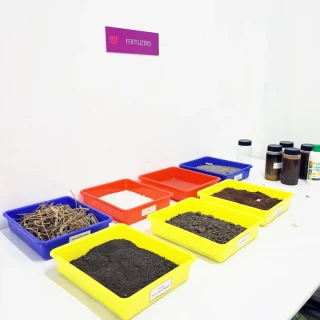
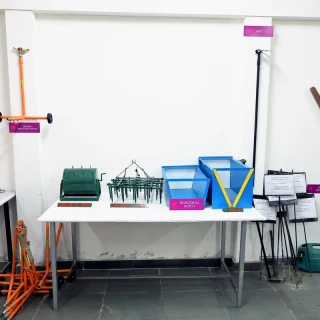
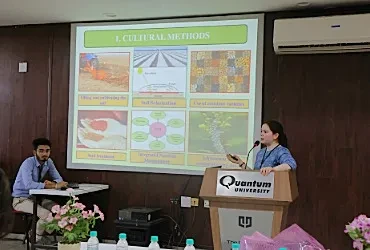
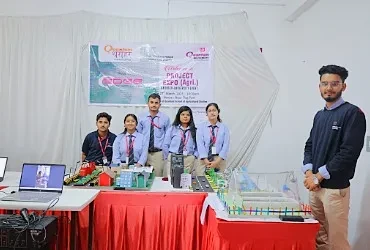
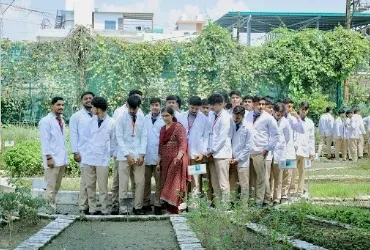
Classroom instruction is enriched through interactive lectures, case studies, problem-solving sessions, and discussion-based learning, supported by modern teaching aids and ICT tools. Field-based teaching, laboratory practicals, and on-farm demonstrations are integral to major and experiential learning courses, allowing students to translate theoretical knowledge into practical applications.
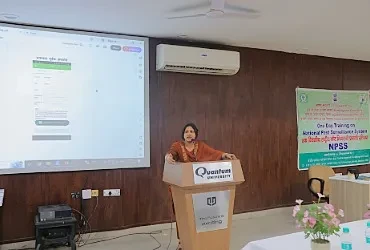
Students are exposed to interdisciplinary knowledge through minor and supporting courses and are encouraged to undertake independent thinking through their master's thesis and seminars. Use of digital platforms, simulation tools, and modules on climate-smart agriculture, precision farming, and agroecology are integrated into the learning process. Guest lectures from experts, workshops, field visits, and industry exposure are regularly incorporated to strengthen real-world understanding and skill development.
The assessment methodology of the M.Sc. (Ag.) Agronomy program is designed to comprehensively evaluate students' knowledge, analytical thinking, practical skills, communication ability, and research competence. It follows a balanced approach combining formative (continuous) and summative (final) assessments. Formative assessments include class tests, quizzes, assignments, presentations, practical evaluations, and group activities to track ongoing learning and provide constructive feedback. Summative assessments are conducted through end-semester examinations covering both theory and practical aspects, focusing on conceptual clarity and problem-solving skills. Evaluation of seminars (2 credits) is based on topic relevance, literature review, presentation quality, and discussion participation. The experiential learning component (4 credits) is assessed through students’ fieldwork, documentation, skill demonstration, and supervisor observations. The Master’s research thesis (30 credits) undergoes phased evaluation—covering proposal development, research execution, report writing, and final viva—by a panel of internal and external experts, emphasizing originality, scientific rigor, data interpretation, and effective communication.


 Undergraduate
 Postgraduate




 Career Tracks
  Entrepreneurship
 Higher Studies