Program Overview
The M.Tech in Information Security & Cyber Forensics program focuses on equipping students with the skills and knowledge required to address modern cybersecurity challenges and ensure the protection of digital assets. The curriculum emphasizes a combination of theoretical foundations and practical applications, covering key areas such as data encryption, network security protocols, cyber risk management, and forensic analysis.
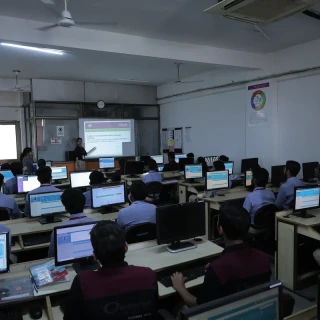
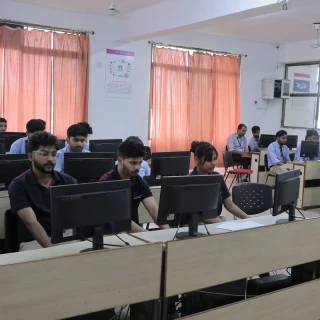
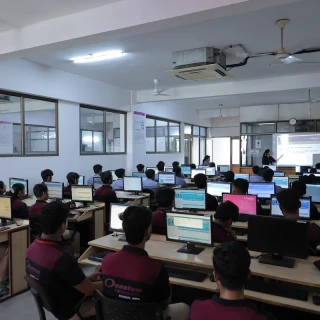
Students gain hands-on experience through cybersecurity labs, real-world projects, and simulations, enabling them to design and implement strategies for incident detection, data recovery, and threat mitigation. The program also explores emerging areas like AI-powered cybersecurity, blockchain security, and cloud forensics, aligning with the evolving needs of India's digital ecosystem.
Graduates from Quantum University, recognized as a leader in engineering education, are equipped to play a pivotal role in safeguarding critical infrastructure, protecting sensitive information, and responding to cyber incidents in industries such as finance, healthcare, defense, and government. With the increasing importance of cyber resilience, this program prepares students for leadership roles in India's cybersecurity landscape and the global technology sector.
Program Structure
The M.Tech in Information Security & Cyber Forensics at Quantum University is a 2-year postgraduate program aimed at developing deep expertise in the areas of cybersecurity, digital forensics, and information assurance. The program is structured across core subjects, electives, interdisciplinary courses, skill-enhancement modules, and project-based components, combining academic rigor with industry-relevant practices.
Building on a solid foundation in Computer Science, the program offers specialized training in areas such as network security, cryptography, ethical hacking, digital forensics, malware analysis, risk management, and cyber laws. The curriculum is designed to cultivate analytical thinking, investigative skills, and practical problem-solving in the field of cybercrime prevention and response.
Students gain hands-on experience through security labs, forensic toolkits, and simulated incident response environments, using platforms and tools such as Kali Linux, Wireshark, EnCase, FTK, Metasploit, and Splunk. The program also includes certification-oriented training and expert-led workshops, ensuring students are aligned with industry standards and equipped for globally recognized roles in cybersecurity.
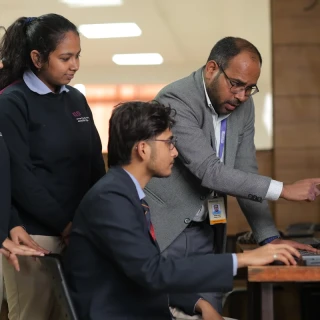
The curriculum includes seminars, webinars, case studies, and research assignments, along with a minor project in the first year and a major dissertation or industry project in the second year, often conducted under faculty guidance or in collaboration with cybersecurity firms. This program structure ensures that graduates are thoroughly prepared for specialist roles in cybersecurity, digital forensics, government cyber agencies, or for pursuing doctoral research in security and forensic computing.
Teaching & Assessment
The Teaching & Assessment approach for the M.Tech in Information Security & Cyber Forensics at Quantum University is designed to cultivate advanced technical proficiency, investigative capabilities, and research skills essential for modern cybersecurity and forensic analysis. The pedagogy emphasizes a blend of deep theoretical learning with hands-on, real-world security practices and forensic investigations.
Teaching methods include advanced lectures, lab-based sessions, cyber range simulations, digital forensics workshops, webinars, seminars, and expert interactions with cybersecurity professionals and legal experts. Students work with industry-standard tools and platforms such as Kali Linux, Wireshark, Metasploit, EnCase, FTK, Splunk, and SIEM (Security Information and Event Management) systems, depending on the course focus. The curriculum is designed to simulate real-world attack scenarios, digital investigations, and incident response strategies, encouraging applied learning and critical analysis.
The assessment framework is structured to evaluate both academic depth and practical skills. It includes written assignments, lab experiments, forensic reports, programming tasks, case study analyses, presentations, and theoretical exams. A core element is the M.Tech dissertation or major project, where students engage in a year-long, mentor-guided research or industry assignment in cybersecurity or digital forensics. This comprehensive teaching and evaluation system ensures graduates are well-prepared for cybersecurity analyst roles, forensic investigators, security consultants, or to pursue doctoral research in cybersecurity and forensic computing.


 Undergraduate
 Postgraduate







 Career Tracks
  Entrepreneurship
 Higher Studies