tr
M.A.   Economics

M.A. - Economics

The M.A. in Economics program at Quantum University is a meticulously designed postgraduate course aimed at providing students with an in-depth understanding of advanced economic theories, quantitative techniques, and policy analysis. Recognized as one of the top universities in India for M.A. Economics, Quantum University offers a curriculum that balances theoretical rigor with practical applications, preparing students for impactful careers in public policy, finance, research, and international development. The program encompasses a wide range of topics, including microeconomics, macroeconomics, econometrics, international trade, development economics, and environmental economics, ensuring that students gain a holistic understanding of the subject. With a focus on data-driven decision-making and policy formulation, students are equipped with the skills required to address complex economic challenges in both national and global contexts. The program also emphasizes research opportunities, enabling students to engage in dissertation projects, econometric modeling, and case studies that enhance their analytical and problem-solving abilities. Graduates from this program are well-prepared to pursue careers as economic advisors, policy consultants, financial analysts, and market researchers, or to advance into academia or roles in governance and international organizations. By fostering critical thinking, innovation, and analytical skills, Quantum University ensures its graduates are capable of making significant contributions to India's economic development and the global economy.

icon 09

Comprehensive Curriculum

Offers in-depth study in microeconomics, macroeconomics, econometrics, international trade, development economics, and environmental economics, ensuring a strong theoretical and practical foundation.

icon 02

Research Opportunities

Provides extensive opportunities for dissertation projects, case studies, and econometric modeling, fostering hands-on experience in data-driven decision-making and policy analysis.

icon 04

Practical Exposure

Encourages participation in workshops, internships, and real-world projects, equipping students with the tools to address economic challenges and innovate solutions.

icon 07

Diverse Career Pathways

Prepares graduates for roles as economic advisors, policy consultants, financial analysts, market researchers, or for higher studies and academic careers, meeting the growing demand for economics professionals in India's public and private sectors.

Program Overview

The M.A. in Economics program at Quantum University bridges academic learning with professional training, equipping students to effectively analyze and interpret complex economic phenomena. The curriculum covers advanced subjects such as microeconomics, macroeconomics, econometrics, international trade, and environmental economics, providing a well-rounded understanding of theoretical and applied economics. Through dissertation projects, case studies, and data modeling, students gain hands-on experience in policy analysis, economic forecasting, and decision-making. The program's focus on innovation, problem-solving, and real-world applications prepares students for leadership roles in finance, public policy, research, and development sectors. Recognized as one of the best economics universities in India, Quantum University ensures its graduates are equipped to contribute meaningfully to economic governance and global economic development.

Program Structure

Studying at one of the best engineering colleges in Roorkee, Quantum University mandates students to fulfill a minimum of (96) credits. Students need to earn credits from courses that are divided into 9 categories: Discipline Specific Core (DSC), Discipline Specific Elective (DSE), Multidisciplinary Core (MDC), Multidisciplinary Minor (MN)/Open Electives (OE), Ability Enhancement Courses (AEC), Skill Enhancement Courses (SEC), Value Added Course (VAC), Summer Internship (SI), Project (PR). Major courses are meticulously chosen and structured to establish a strong base for students.

Teaching & Assessment

At Quantum University, the pedagogy of the Department of Humanities and Social Sciences, particularly in the discipline of Economics, emphasizes academically rigorous, industry-relevant, and socially responsive interactive learning. Through a blend of lectures, seminars, workshops, role plays, and certified training programs, students gain a strong foundation in economic theories and are encouraged to apply these concepts to real-world economic challenges.

The department enhances experiential learning by integrating guest lecturers from economists and industry experts, as well as organizing industrial visits, field surveys, library research, and webinars. These initiatives bridge the gap between theoretical frameworks and their practical implications in markets, policy-making, development strategies, and financial systems.

Teaching methodologies in Economics at Quantum University are aligned with students’ academic goals and career aspirations. They include data analysis tools, simulations, case studies, and project-based learning to promote critical thinking. The curriculum is rooted in current research and professional expertise, exposing students to emerging trends and real-world economic challenges. Assessments such as policy briefs, econometric projects, and field reports develop analytical and decision-making skills. These strategies ensure academic rigor and readiness for careers in government, corporate, and development sectors.

Curriculum

  • Micro Economics I
  • Macro Economics I
  • Statistics for Economist
  • Mathematics for Economist
  • Micro Economics II
  • Macro Economics II
  • Econometrics
  • Research Methodology
  • Development Economics
  • Environmental Economics
  • Globalisation and Development
  • Monetary Economics
  • Health Economics
  • Comtemporary Economic Thought
  • Indian Economics
  • Public Economics
  • Labor Economics
  • Gender Economics
  • Behavioral Economics
  • Public Policy Theory and Practices

Program Outcomes

Program Educational Objectives (PEO's)
PEO1
Post Graduate students will develop a strong foundation in English literature, linguistics, and economics, enabling them to critically analyze literary texts, understand language structures, and apply economic theories. They will be prepared to engage in cross-disciplinary thinking, connecting literary narratives with socio-economic and historical contexts.
PEO2
Post Graduate students will be equipped with the analytical, linguistic, and methodological skills necessary for academic research, teaching, and effective communication. They will be able to design and deliver pedagogical content, conduct literary and economic research, and contribute meaningfully to scholarly and educational fields.
PEO3
Post Graduate students will apply their understanding of literature, language, and economics to address contemporary societal issues, advocate for inclusive practices, and promote cultural awareness. They will be capable of contributing to public policy, education, and community development with a global and ethical outlook.
Program Specific Outcomes (PSO's)
PSO1
Literary, Linguistic, and Cultural Competence:Students will demonstrate advanced knowledge and interpretive skills in English literature—ranging from classical to contemporary works—alongside an understanding of linguistics, translation, and cultural theory. They will be able to critically engage with diverse literary texts and apply theoretical frameworks to analyze cultural and gender issues in global and Indian contexts.
PSO2
Economic Analysis and Policy Application: Students will acquire comprehensive expertise in microeconomics, macroeconomics, econometrics, and specialized areas such as development, labor, gender, and public economics. They will be capable of conducting data-driven economic research and applying economic principles to evaluate policies and address real-world economic challenges.
Program Outcomes (PO's)
PO-01
Demonstrate the ability to critically analyze literary texts, economic theories, and cultural artifacts using appropriate theoretical and methodological tools.
PO-02
Integrate concepts from literature, language, and economics to develop well-rounded perspectives on societal, historical, and policy issues.
PO-03
Exhibit proficiency in written and oral communication, suitable for academic, pedagogical, and professional settings across diverse audiences.
PO-04
Apply research methodologies in linguistics, literature, and economics to formulate hypotheses, analyze data, and draw evidence-based conclusions.
PO-05
Demonstrate advanced understanding of English literary history, genres, criticism, and linguistic theories for both scholarly and practical applications.
PO-06
Comprehend and apply economic principles and quantitative techniques to assess real-world problems, development strategies, and policy interventions.
PO-07
Design and implement effective English Language Teaching (ELT) methods, incorporating linguistic theory and practical strategies in multilingual contexts.
PO-08
Respect cultural diversity, gender perspectives, and ethical concerns in both literary interpretation and economic policy analysis.
PO-09
Utilize digital tools and resources for research, teaching, linguistic analysis, and economic modeling to enhance productivity and learning.
PO-10
Demonstrate readiness for careers in academia, public policy, education, publishing, or economic consultancy, and maintain a commitment to continuous learning.

Minor Degree Programs

At Quantum University, students have the freedom to expand their academic horizons beyond their core area of study. Through minor programs, they can choose courses from related or entirely different disciplines, encouraging interdisciplinary learning and personal growth. This flexible approach empowers students to design a well-rounded education, explore new interests, and develop diverse skill sets that prepare them for dynamic career opportunities.

Some of the MINOR Degrees being offered are:

  • Entrepreneurship & Startups
  • Foreign languages (French)
  • Media Management
  • Financial Literacy
  • Robotics & Automation
  • Microsoft Office
  • Culinary Arts
  • Data Analytics
  • Web Designing
Explore More

Experiential Learning

Experiential Learning in M.A. Economics Program Quantum University's 2-year M.A. Economics program offers a comprehensive learning experience that integrates theoretical knowledge with practical application. Designed for students aiming to excel in fields like policymaking, finance, research, and academia, the program emphasizes analytical thinking, quantitative skills, and a deep understanding of economic principles.

Data Analysis & Economic Modeling

Data Analysis & Economic Modeling

Students work on real-world data sets to develop skills in economic modeling and quantitative analysis using tools like R, Python, and STATA. By solving practical economic problems, students gain expertise in policy evaluation, forecasting, and decision-making.

Research Projects & Policy Analysis

Research Projects & Policy Analysis

The program emphasizes research-based learning through projects focused on critical areas such as public policy, international trade, and developmental economics. Students analyze real-world economic issues and propose evidence-based solutions, preparing them for roles in research and policymaking.

Internships

Internships

Students benefit from internships and collaborative projects with government bodies, think tanks, and financial institutions. These experiences provide practical insights into areas such as economic planning, financial markets, and policy implementation, helping bridge the gap between academics and industry.

Seminars & Guest Lectures

Seminars & Guest Lectures

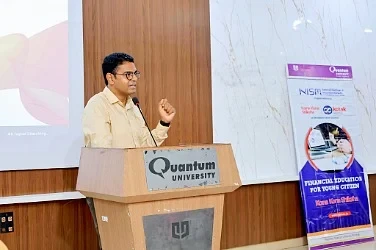
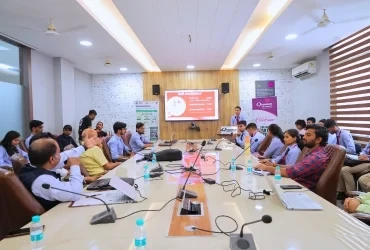
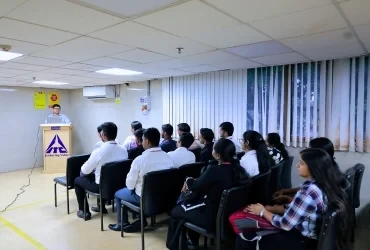
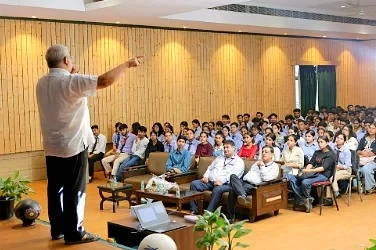
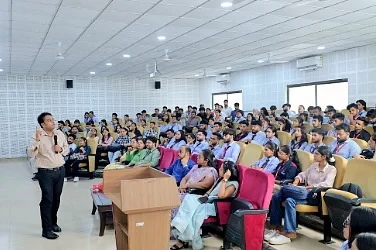
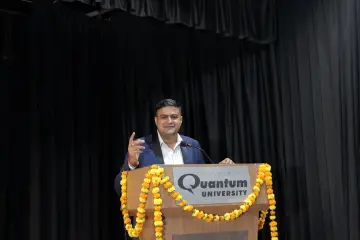
Renowned economists and industry experts deliver guest lectures and conduct seminars on emerging trends and challenges in economics, such as sustainable development, behavioral economics, and global financial systems. These sessions enhance students' understanding of contemporary economic issues.

Workshops on Econometrics & Financial Tools

Workshops on Econometrics & Financial Tools

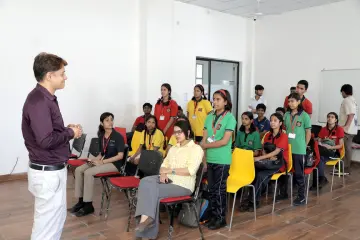
Workshops on advanced topics like econometrics, game theory, and financial modeling equip students with technical skills essential for analyzing complex economic phenomena. These hands-on sessions ensure students are industry-ready and capable of tackling real-world economic challenges.

Outstanding Career Outcomes

Our graduates are in high demand across top engineering companies and innovative startups


  • LPAHIGHEST PACKAGE OFFERED
  •  NUMBER OF COMPANIES VISITED
  •  NUMBER OF STUDENTS PLACED
  • LPAAVERAGE PACKAGE OFFERED

Career Tracks

Lecturer

Academic teaching in colleges.

Research Associate

Scholarly research and publications.

Policy Analyst

Government or institutional policy evaluation.

Writer

Academic and creative writing.

Career Tracks
2
Career Tracks
Career Tracks
Career Tracks
Career Tracks
Career Tracks
Career Tracks
Career Tracks
bhm
bhm2
health

Entrepreneurship

Comprehensive Skill Development: At Quantum University, the teaching methodology includes extensive Skill Development Courses (SKCs) designed to equip students with the necessary skills to start their own ventures.

Entrepreneurial and Leadership Opportunities: Quantum University is providing ample opportunities to students to start their own ventures. More than 100 Start-ups are in progress.

Networking and Career Success: Quantum University fosters strong industry connections and real-world exposure, enabling students to build professional networks and unlock rewarding career opportunities.

Entrepreneurship
Entrepreneurship
Entrepreneurship
Entrepreneurship
Entrepreneurship
Entrepreneurship
Entrepreneurship
Entrepreneurship
Entrepreneurship
Entrepreneurship
Entrepreneurship
Entrepreneurship

Higher Studies

Master’s Programs: Quantum University offers a range of industry-relevant master's programs designed to deepen academic knowledge, enhance professional skills, and prepare students for leadership roles in their chosen fields.

Ph.D. Opportunities: Quantum University offers rigorous Ph.D. programs that foster advanced research, innovation, and academic excellence. With expert mentorship, interdisciplinary collaboration, and access to cutting-edge resources, scholars are empowered to contribute meaningful insights to their fields.

Networking and Career Success: Students benefit from a strong ecosystem of industry partnerships, alumni networks, and career development support. Regular workshops, internships, expert talks, and placement drives help students build valuable connections and achieve long-term career success.

Higher Studies
Higher Studies

Higher Studies

Higher Studies

Higher Studies

Higher Studies

Higher Studies

Higher Studies

Higher Studies

Higher Studies

health
rr

Mentors Who Shape Futures

ravinder kumar
Dr. Ravindra Kumar
Associate Professor
Profile
monita mohan
Dr. Monita Mohan
Assistant Professor
Profile
veeke
Dr. Veeke
Assistant Professor
Profile
naznin
Dr. Naznin
Assistant Professor
Profile
mohneesh gupta
Dr. Mohneesh Gupta
Assistant Professor
Profile
dr nupur jaiswal
Dr. Noopur Jaiswal
Assistant Professor
Profile
jaya verma negi
Jaya Verma Negi
Assistant Professor
Profile
isha manaktala
Isha Manaktala
Assistant Professor
Profile
ashish garg
Ashish Garg
Lecturer
Profile
poulami banerjee
Poulami Banerjee
Assistant Professor
Profile

Research Highlights

Quantum University fully supports and encourages interdisciplinary research initiatives across different areas of study.

  • +Paper Publications
  • +Patents
  • +Startup Grants

Industry -Academic Collaborations

Quantum University has partnerships with over 150 industry leaders, providing students with valuable practical experience and exposure to current industry trends. Companies offer internships, real-world projects, and job opportunities to over 900 students annually at the best packages.



comp 04
comp 05
comp 06
comp 07
comp 08
comp 10
comp 11
comp 12


Learning Experience

curriculum

CURRICULUM

interdisciplinary

INTERDISCIPLINARY

passion programs 2

PASSION PROGRAMS (PROPS)