Program Overview
The M.Sc in Nutrition and Dietetics program at Quantum University is designed to provide students with advanced knowledge of nutrition science, dietetics, and public health nutrition. The curriculum includes in-depth exploration of topics such as clinical nutrition, nutrigenomics, therapeutic diets, food service management, and community nutrition, equipping students with the skills to design and implement effective dietary interventions. Emphasizing research and community engagement, students gain hands-on experience through research projects, case studies, and dissertations, enabling them to tackle critical health challenges. This program’s focus on scientific research, public health strategies, and innovative approaches ensures graduates are prepared for roles in clinical nutrition, research, academia, and public health initiatives. Recognized as one of the best postgraduate programs in nutrition and dietetics in India, Quantum University prepares students for leadership positions in the rapidly evolving healthcare and nutrition sectors.
Program Structure
The M.Sc. Nutrition and Dietetics program is a postgraduate academic degree aimed at deepening theoretical knowledge and advancing practical competencies in the field of human nutrition, diet therapy, and applied nutrition sciences. The program comprises a total of 103 credits, carefully distributed across multiple course categories to ensure both academic rigour and professional relevance.
Students undertake 60 credits in Discipline-Specific Courses (DSC), which form the core of the curriculum. These courses cover advanced topics in clinical nutrition, medical nutrition therapy, metabolic disorders, public health nutrition, and food service management, offering in-depth exposure and critical understanding of specialised nutritional science.
Additionally, the curriculum includes 16 credits of Discipline-Specific Elective (DSE) courses, which provide flexibility to students to select from emerging and advanced areas such as nutraceuticals, sports and fitness nutrition, maternal and child nutrition, and geriatric nutrition. These electives help students specialise based on their interests and career paths.
Although Open Electives (OE) are not included in the current credit distribution, the program compensates through its multi-faceted Value-Added and research-oriented components.
The program also includes 7 credits for Ability Enhancement Courses (AEC) that focus on refining communication skills, research methodology, biostatistics, academic writing, and the use of technology in data analysis. These courses are essential to building the foundational academic tools necessary for professional practice and postgraduate research.
To complement core and elective learning, 3 credits are allocated to Value-Added Courses (VCA), typically offered as audit courses. These include certifications and short modules on topics like food safety regulations, entrepreneurship, yoga and wellness, and digital nutrition counselling. Though not mandatory for grading, these courses enrich the student’s practical and professional outlook.
A significant feature of the program is the Research / Internship / Field Work component, which carries 8 credits. This involves supervised practical training in clinical, industrial, or community-based settings such as hospitals, food industries, public health institutions, and research labs, thereby ensuring application of knowledge in real-world contexts.
The program culminates with a Dissertation / Project, which accounts for 10 credits. Students undertake independent research under faculty guidance, leading to the development of a thesis, presentation at academic conferences, or submission of a publishable research paper. This component fosters scientific thinking, problem-solving abilities, and an evidence-based approach to nutrition practice.
In conclusion, the M.Sc. Nutrition & Dietetics program is designed to create highly skilled professionals equipped with advanced knowledge, research acumen, and practical experience. It prepares graduates to pursue roles in clinical dietetics, public health, academia, research, food industries, and government sectors, as well as higher research degrees like M.Phil and Ph.D.
Teaching & Assessment
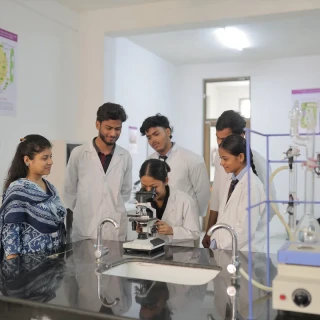
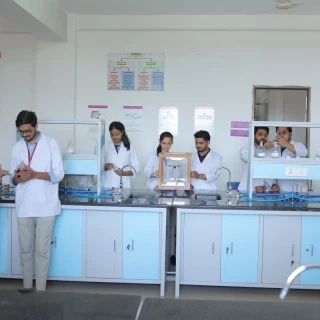
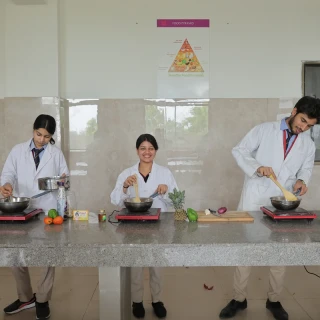
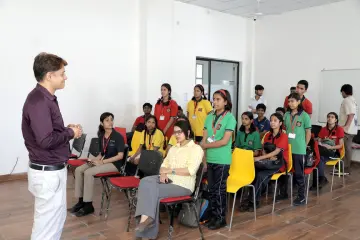
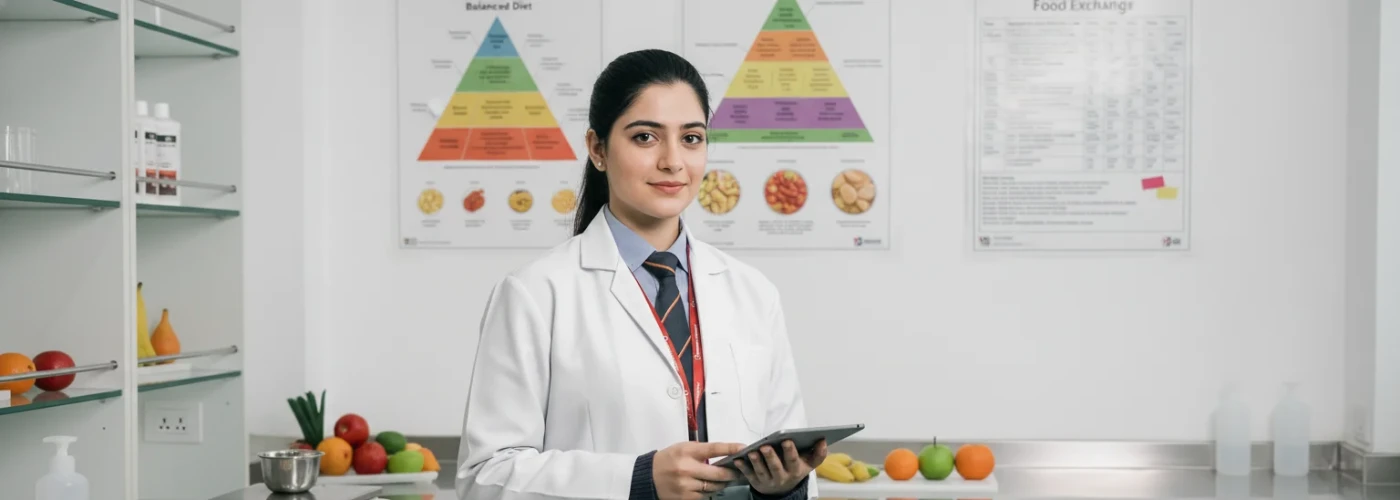
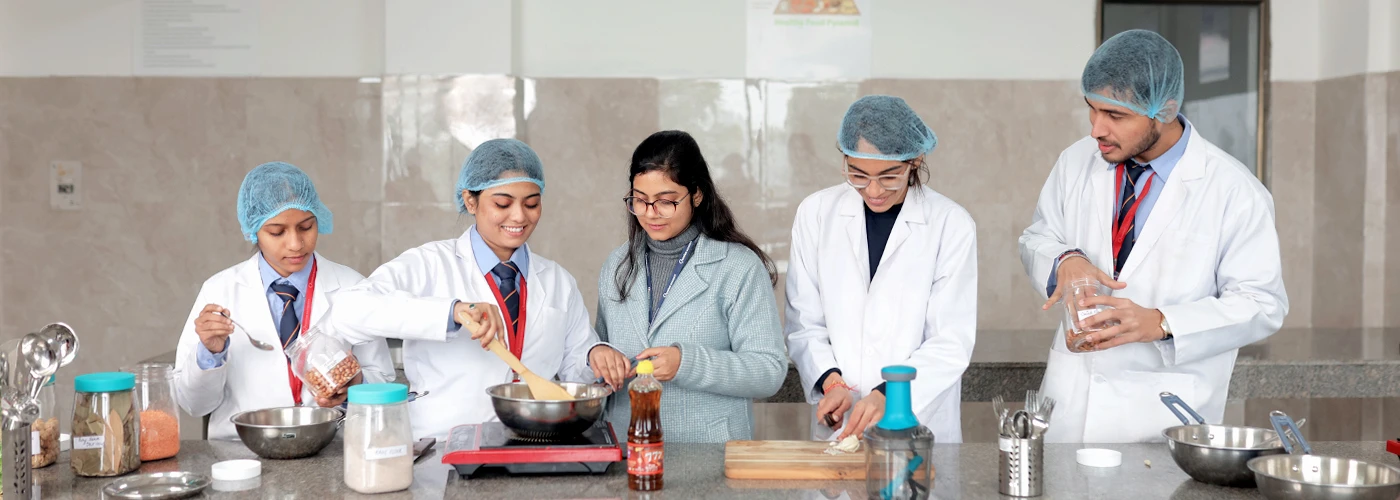
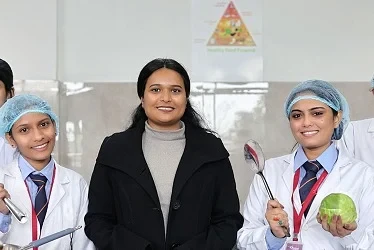
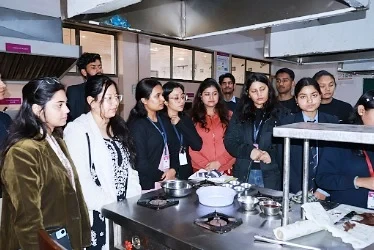
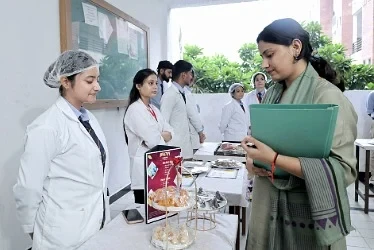
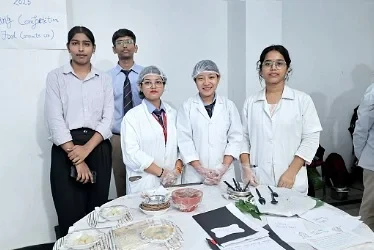
The M.Sc. Nutrition and Dietetics program at Quantum University is designed to blend academic knowledge with practical experience, addressing the demands of the healthcare, food, and wellness industries. The curriculum combines lectures on core subjects such as human physiology, biochemistry, food science, and clinical nutrition with hands-on training in therapeutic diet planning, food microbiology, biochemical analysis, and menu planning. Learning is further enhanced through workshops, webinars, and expert-led sessions from hospitals, food industries, and wellness organizations. Students also gain real-world exposure through field visits and outreach activities in NGOs, schools, and healthcare centers. Teaching methods include the use of ICT tools, case studies, group discussions, role-plays, and diet counseling simulations, creating an engaging, application-oriented learning environment. Additionally, value-added certificate courses in areas like food safety, yoga, wellness, and entrepreneurship support holistic development and improve employability.
Assessment is carried out through a balanced approach, including written exams, lab work, assignments, viva-voce, and continuous internal evaluations like class tests and case study analyses. Practical skills are assessed through simulations and demonstrations in diet counseling and menu planning. A key highlight is the final-year research project, where students conduct independent studies under faculty supervision, leading to dissertations or presentations. Industry exposure is ensured through mandatory internships in hospitals, food industries, wellness centers, and NGOs, with performance critically evaluated. This integrated teaching and assessment strategy equips graduates with strong scientific knowledge, technical skills, research capability, and professional competence, preparing them for diverse roles in clinical practice, community health, industry, and academia.


 Undergraduate
 Postgraduate



 Career Tracks
  Entrepreneurship
 Higher Studies