tr
B.Tech   Electronics & Communications Engineering (ECE) with specilisation in Semiconductors in collaboration with L&T
B.Tech - Electronics & Communications Engineering (ECE) with specilisation in Semiconductors in collaboration with L&T
Apply Now

B.Tech - Electronics & Communications Engineering (ECE) with specilisation in Semiconductors in collaboration with L&T

The B.Tech in Electronics and Communication Engineering (ECE) program at Quantum University, offered in collaboration with Larsen & Toubro (L&T), is designed to equip students with the expertise required to excel in the dynamic fields of electronics and communication technology. As industries increasingly rely on smart devices, wireless communication, and automation systems, the demand for skilled engineers in these domains is higher than ever. This program emphasizes both theoretical knowledge and hands-on training, enabling students to design, develop, and implement advanced electronic systems and communication networks.

The curriculum includes core topics such as VLSI design, embedded systems, signal processing, wireless networks, and Internet of Things (IoT), ensuring students gain a comprehensive understanding of modern technologies and their applications. Collaboration with L&T, a global leader in engineering and technology, allows students to gain valuable insights into industry trends and best practices. Students also gain hands-on experience with cutting-edge tools like MATLAB, LabVIEW, and FPGA boards, preparing them for real-world challenges in sectors such as telecommunications, consumer electronics, and industrial automation.

Through internships, workshops, and live projects guided by industry professionals, students develop critical problem-solving and technical skills that make them industry-ready. Recognized among the top engineering colleges in India, Quantum University's ECE program provides graduates with the knowledge and experience needed to thrive in high-demand roles in India's thriving technology sector and on a global scale.

icon 09

Industry-Driven Curriculum

Covers advanced topics like VLSI design, IoT systems, embedded programming, wireless communication protocols, and signal processing techniques.

icon 02

Practical Learning Opportunities

Engage in real-world projects, workshops, and internships guided by experts from Larsen & Toubro.

icon 04

Cutting-Edge Tools

Master industry-standard tools such as MATLAB, LabVIEW, FPGA boards, and CAD tools for electronic and communication system design.

icon 07

Career Opportunities

Prepare for roles in telecommunications, IoT-based industries, robotics, consumer electronics, and defensecommunication systems.

Program Overview

The B.Tech in Electronics and Communication Engineering program emphasizes the development of innovative solutions and state-of-the-art technologies in electronics and communication systems. Students are trained to design, test, and implement systems that form the backbone of modern industries, including telecommunication networks, smart devices, and industrial IoT systems.

Through its partnership with L&T, the program bridges the gap between academic learning and industry expectations. Students gain exposure to real-world challenges and large-scale projects, enhancing their understanding of automation, network optimization, and signal processing applications. The curriculum also integrates the study of sustainable technologies and smart systems, addressing the evolving needs of industries in India and globally.

Graduates from Quantum University emerge as industry-ready professionals equipped to innovate and lead in electronics, communication technology, and automation sectors, contributing to the growth of India's Digital and Smart Infrastructure initiatives and the global tech ecosystem.

Program Structure

Studying at one of the premier engineering institutions in Roorkee, Quantum University offers a specialized B.Tech in Electronics and Communication Engineering (ECE) with a focus on Semiconductors, in collaboration with Larsen & Toubro (L&T). This program is thoughtfully designed to merge academic excellence with industry-centric training in the rapidly evolving semiconductor domain. The program follows a comprehensive structure divided into nine academic categories: Discipline Specific Core (DSC), Discipline Specific Elective (DSE), Multidisciplinary Core (MDC), Multidisciplinary Minor (MN)/Open Electives (OE), Ability Enhancement Courses (AEC), Skill Enhancement Courses (SEC), Value Added Courses (VAC), Summer Internship (SI), and Project (PR).

The curriculum is developed to provide a strong theoretical base in electronics, while also delivering deep practical exposure through labs, simulations, and hands-on learning experiences. Key focus areas include VLSI Design, Semiconductor Device Physics, Embedded Systems, Digital System Design, IC Fabrication, and Chip Testing & Validation. With active involvement from L&T and its semiconductor ecosystem, students gain industry-relevant skills through certified training modules, real-world projects, and exposure to clean room environments and fabrication labs.

This unique collaboration ensures that students graduate with both the technical proficiency and practical experience required to meet the demands of the fast-paced semiconductor industry. By blending academic rigor with practical industry insight, the program equips future engineers with the capabilities to contribute meaningfully to sectors such as electronics manufacturing, chip design, telecommunications, and advanced computing.

Teaching & Assessment

At Quantum University, the teaching pedagogy for the B.Tech Electronics and Communication Engineering (Semiconductors) L&T Collaborative Program is designed to be industry-integrated, technology-driven, and outcome-oriented, ensuring that students develop both deep theoretical understanding and hands-on technical proficiency. The curriculum is delivered through a blended teaching model comprising classroom lectures, industry-led expert seminars, technical webinars, certified workshops, and practical training sessions conducted by professionals from L&T and semiconductor domain experts.

Students gain experiential learning through real-time projects, semiconductor design challenges, industry simulations, fabrication lab training, and capstone projects. They also actively participate in student-led innovation forums, technical symposiums, and national-level competitions, fostering critical thinking, collaboration, and leadership skills. Specialized sessions on IC design, chip fabrication, VLSI verification, and embedded system development ensure alignment with emerging trends in the semiconductor industry.

The assessment strategy is continuous and holistic, incorporating internal evaluations such as quizzes, assignments, laboratory performance, simulation exercises, and design-based learning, along with mid-semester and end-semester examinations. Additional assessment methods include industry project reports, technical presentations, portfolio reviews, viva voce, and group discussions. Students are also evaluated based on skill certifications in industry-standard tools like Cadence, MATLAB, Xilinx, Verilog/VHDL, and Synopsys.

This integrated approach leverages modern teaching tools, virtual labs, interactive simulations, and mentoring by domain experts to provide real-world insights. In collaboration with L&T, the program prepares students to become job-ready semiconductor professionals, equipped with a strong conceptual base, practical skills, and the ability to innovate in a fast-growing, high-tech sector.

Curriculum

  • Basics of Computer and C Programming
  • Basics of Computer and C Programming Lab
  • Engineering Physics
  • Engineering Physics Lab
  • Mathematics I
  • Fundamentals of Mechanical & Mechatronics Engineering
  • Communication & Professional Skills -I
  • Disaster Preparedness & Management
  • Indian Knowledge System
  • General Proficiency
  • Mathematics II
  • Human Values and Ethics
  • Environmental Studies
  • Basic Electrical and Electronics Engineering
  • Basic Electrical and Electronics Engineering Lab
  • Product Design Thinking Framework
  • Manufacturing Practice Workshop
  • Communication and Soft Skills-II
  • United Nations Development Programme
  • General Proficiency
  • Mathematics III
  • Electronic Devices and Circuits
  • Digital Electronics
  • Signals and Systems
  • Open Elective I
  • Embedded Computing Principles
  • Digital Electronics Lab
  • Electronic Devices and circuits Lab
  • Python Programming Concepts Lab
  • Project Lab I
  • Communication and Soft Skills-III
  • Summer Internship I
  • General Proficiency
  • Network Theory
  • Analog Circuits
  • Microprocessors & Interfaces
  • Analog and Digital Communication
  • Open Elective II
  • Product Architecture Models and Firmware
  • Analog Circuits Lab
  • Microprocessors & Interfaces Lab
  • Analog and Digital Communication Lab
  • Project Lab II
  • Employability Skills I (Aptitude Abilities)
  • General Proficiency
  • Digital Signal Processing
  • Electromagnetic Waves
  • Electronics Measurement and Instrumentation
  • Control Systems
  • RTL Design and Verification
  • Open Elective III
  • Digital Signal Processing Lab
  • Electromagnetic Waves Lab
  • Project Lab III
  • Employability Skills II (Reasoning Ability)
  • Summer Internship II
  • General Proficiency
  • Embedded Systems
  • Microcontrollers
  • Power Electronics
  • Logic Synthesis and DFT
  • Product Innovation & Entrepreneurship
  • Program Elective I
  • Embedded Systems Lab
  • Microcontrollers Lab
  • Project Lab IV
  • Employability Skills III(PDP)
  • Technical VAP I
  • General Proficiency
  • Mobile Communication and Networks
  • VLSI Design
  • Program Elective II
  • Program Elective III
  • VLSI Design Lab
  • Project Lab V
  • Engineering Project- 1 (Literature Review, Design & Analysis)
  • Technical VAP II
  • Summer Internship III
  • General Proficiency
  • Program Elective IV
  • Program Elective V
  • Engineering Project- II (Prototype and Testing)

Program Outcomes

Program Educational Objectives (PEO's)
PEO1
Pursue successful careers in industry by leveraging strong technical expertise, hands-on experience, critical thinking, and effective teamwork skills
PEO2
Seek professional development opportunities to complement their undergraduate degree and accelerate career advancement
PEO3
Engage in continuous learning with cutting-edge technologies to address societal challenges using logical and adaptable decision-making approaches
Program Specific Outcomes (PSO's)
PSO1
To analyse, design and develop solutions for the real time problems and to apply the technical Knowledge for developing quality products for Electronics and Communication based Industry.
PSO2
To adapt to emerging Information and Communication technologies and to develop innovative ideas and solutions in Communication, Networking, Embedded Systems, VLSI and semiconductor chip design.
PSO3
An ability to make use of acquired technical knowledge to get employed in the field of Electronics and Communication and also to become successful Entrepreneur.
Program Outcomes (PO's)
PO-01
Apply the knowledge of mathematics, science, engineering fundamentals and an engineering specialization to the solution of complex engineering problems.
PO-02
Identify, formulate, review research literature, and analyze complex engineering problems reaching substantiated conclusions using first principles of mathematics, natural sciences, and engineering sciences.
PO-03
Design solutions for complex engineering problems and design system components or processes that meet the specified needs with appropriate consideration for the public health and safety, and the cultural, societal, and environmental considerations.
PO-04
Use research-based knowledge and research methods including design of experiments, analysis and interpretation of data, and synthesis of the information to provide valid conclusions
PO-05
Create, select, and apply appropriate techniques, resources, and modern engineering and IT tools including prediction and modeling to complex engineering activities with an understanding of the limitations.
PO-06
Apply reasoning informed by the contextual knowledge to assess societal, health, safety, legal and cultural issues and the consequent responsibilities relevant to the professional engineering practice.
PO-07
Understand the impact of the professional engineering solutions in societal and environmental contexts, and demonstrate the knowledge of, and need for sustainable development.
PO-08
Communicate effectively on complex engineering activities with the engineering community and with society at large, such as, being able to comprehend and write effective reports and design documentation, make effective presentations, and give and receive clear instructions
PO-09
Apply ethical principles and commit to professional ethics and responsibilities and norms of the engineering practice
PO-10
Function effectively as an individual, and as a member or leader in diverse teams, and in multi disciplinary settings.
PO-11
Demonstrate knowledge and understanding of the engineering and management principles and apply these to one's own work, as a member and leader in a team, to manage projects and in multi disciplinary environments.
PO-12
Recognize the need for, and have the preparation and ability to engage in independent and life-long learning in the broadest context of technological change.

Minor Degree Programs

At Quantum University, students have the freedom to expand their academic horizons beyond their core area of study. Through minor programs, they can choose courses from related or entirely different disciplines, encouraging interdisciplinary learning and personal growth. This flexible approach empowers students to design a well-rounded education, explore new interests, and develop diverse skill sets that prepare them for dynamic career opportunities.

Some of the MINOR Degrees being offered are:

  • Entrepreneurship & Startups
  • Foreign languages (French)
  • Media Management
  • Financial Literacy
  • Robotics & Automation
  • Microsoft Office
  • Culinary Arts
  • Data Analytics
  • Web Designing
Explore More

Experiential Learning

Quantum University's 4-year B.Tech Electronics & Communications Engineering (ECE) program offers an innovative and immersive learning experience that combines academic excellence with hands-on practical exposure. This program is designed to equip students with the technical expertise, creativity, and leadership skills needed to thrive in the rapidly evolving electronics and communication industry. With specialized tracks in VLSI Design, Embedded Systems, Internet of Things (IoT), Robotics & Automation, Wireless Communication, and Signal Processing, students can customize their education to meet their career goals and align with emerging industry trends.

Innovation Challenges & Hackathons

Innovation Challenges & Hackathons

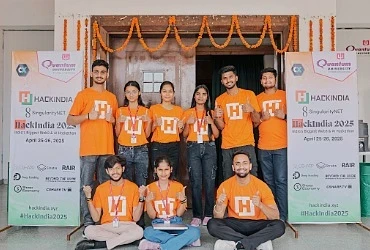
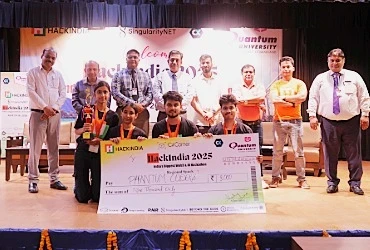
Quantum University encourages ECE students to participate in inter-university and national-level hackathons and innovation challenges. These events provide a platform for students to develop real-world solutions in fields like embedded systems, IoT, and wireless communication, fostering creativity, teamwork, and technical proficiency. The CIRCUIT Club of the ECE department organizes exclusive innovation marathons and project competitions, enabling students to brainstorm, collaborate, and showcase their expertise in advanced domains such as robotics and VLSI design.

Technical Events & Competitions

Technical Events & Competitions

Technical events like circuit design challenges, electronics quizzes, and project showcases form an integral part of the learning experience. Organized by the CIRCUIT Club under the department's Passion Program, these events expose students to the latest technologies such as signal processing, wireless communication, and automation systems. By working on live projects and solving real-world challenges, students develop critical problem-solving skills, build confidence, and gain exposure to cutting-edge technologies.

Internships & Industry Training

Internships & Industry Training

Quantum University's collaborations with over 150 leading industry partners offer ECE students unparalleled opportunities for internships and certified training programs. Through hands-on projects in specialized areas such as IoT, VLSI design, and robotics, students bridge the gap between academic knowledge and industry practices. These internships help students acquire essential technical and soft skills, expand their professional networks, and gain a competitive edge in their careers.

Workshops & Seminars

Workshops & Seminars

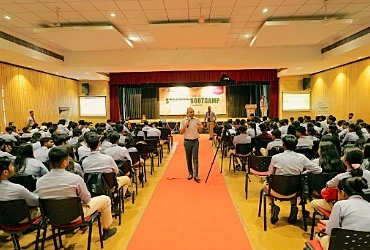
Industry-driven workshops and expert-led seminars are integral to the B.Tech ECE program. These sessions focus on emerging technologies such as embedded systems, IoT, robotics, and signal processing. By engaging with seasoned professionals, students gain practical knowledge and hands-on experience, enabling them to solve real-world problems. These workshops also help students deepen their understanding of their chosen specializations and prepare for advanced roles in the electronics and communications industry.

Industrial Visits & Exposure

Industrial Visits & Exposure

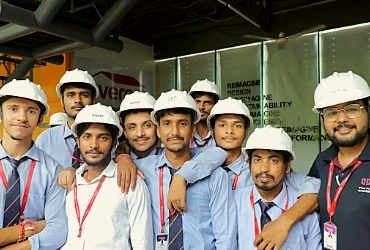
To enhance experiential learning, Quantum University organizes regular industrial visits for ECE students. These visits provide insights into professional workflows, cutting-edge technologies, and industry methodologies in areas such as automation, communication systems, and semiconductor manufacturing. By connecting theoretical concepts to real-world practices, industrial visits offer students a comprehensive understanding of the industry landscape and its expectations.

With its focus on hands-on learning, interdisciplinary exposure, and industry relevance, the B.Tech Electronics & Communications Engineering program at Quantum University prepares students to excel in the dynamic and fast-paced world of electronics and communication technology.

Outstanding Career Outcomes

Our graduates are in high demand across top engineering companies and innovative startups


  • LPAHIGHEST PACKAGE OFFERED
  •  NUMBER OF COMPANIES VISITED
  •  NUMBER OF STUDENTS PLACED
  • LPAAVERAGE PACKAGE OFFERED

Career Tracks

Electronics Design Engineer

PCB and electronic circuit design and testing.

VLSI Engineer

Microchip design, fabrication, and simulation.

Embedded Systems Engineer

IoT device programming and firmware development.

Telecom Engineer

Wireless communication and networking solutions.

Career Tracks
2
Career Tracks
Career Tracks
Career Tracks
Career Tracks
Career Tracks
Career Tracks
Career Tracks
bhm
bhm2
health

Entrepreneurship

Comprehensive Skill Development: At Quantum University, the teaching methodology includes extensive Skill Development Courses (SKCs) designed to equip students with the necessary skills to start their own ventures.

Entrepreneurial and Leadership Opportunities: Quantum University is providing ample opportunities to students to start their own ventures. More than 100 Start-ups are in progress.

Networking and Career Success: Quantum University fosters strong industry connections and real-world exposure, enabling students to build professional networks and unlock rewarding career opportunities.

Entrepreneurship
Entrepreneurship
Entrepreneurship
Entrepreneurship
Entrepreneurship
Entrepreneurship
Entrepreneurship
Entrepreneurship
Entrepreneurship
Entrepreneurship
Entrepreneurship
Entrepreneurship

Higher Studies

Master’s Programs: Quantum University offers a range of industry-relevant master's programs designed to deepen academic knowledge, enhance professional skills, and prepare students for leadership roles in their chosen fields.

Ph.D. Opportunities: Quantum University offers rigorous Ph.D. programs that foster advanced research, innovation, and academic excellence. With expert mentorship, interdisciplinary collaboration, and access to cutting-edge resources, scholars are empowered to contribute meaningful insights to their fields.

Networking and Career Success: Students benefit from a strong ecosystem of industry partnerships, alumni networks, and career development support. Regular workshops, internships, expert talks, and placement drives help students build valuable connections and achieve long-term career success.

Higher Studies
Higher Studies

Higher Studies

Higher Studies

Higher Studies

Higher Studies

Higher Studies

Higher Studies

Higher Studies

Higher Studies

health
rr

Mentors Who Shape Futures

dr  himanshu tyagi
Dr. Himanshu Tyagi
Assistant Professor
Profile
amrita kumari
Dr. Amrita Kumari
Assistant Professor
Profile
iqbal sir
Dr. Md. Iqbal
Professor
Profile
director qst
Dr. Brij Mohan Singh
Professor
Profile
dean sir  final
Dr. Satender Kumar
Associate Professor
Profile
dr  mridula
Dr. Mridula
Professor
Profile
raj kumar
Dr. Raj Kumar
Assistant Professor
Profile
dr  anuj kumar
Dr. Anuj Kumar
Assistant Professor
Profile
ankur rana
Dr. Ankur Rana
Assistant Professor
Profile
deepak bhatt
Deepak Bhatt
Assistant Professor
Profile

Labs

Internet Lab

Internet Lab

Internet Lab
Computer Applications Lab

Computer Applications Lab

Computer Applications Lab
Database Management System Lab

Database Management System Lab

Database Management System Lab
Data Structure Lab

Data Structure Lab

Data Structure Lab
3r5a6458

Design and Analysis of Algorithms Lab

Design and Analysis of Algorithms Lab
AK Khare Interdisciplinary Center of Excellence in AI

AK Khare Interdisciplinary Center of Excellence in AI

AK Khare Interdisciplinary Center of Excellence in AI
Object Oriented Programming Lab

Object Oriented Programming Lab

Object Oriented Programming Lab
Open Source Lab

Open Source Lab

Open Source Lab
Operating System Lab

Operating System Lab

Operating System Lab
Python Programming Lab

Python Programming Lab

Python Programming Lab

Research Highlights

Quantum University fully supports and encourages interdisciplinary research initiatives across different areas of study.

  • +Paper Publications
  • +Patents
  • +Startup Grants

Industry -Academic Collaborations

Quantum University has partnerships with over 150 industry leaders, providing students with valuable practical experience and exposure to current industry trends. Companies offer internships, real-world projects, and job opportunities to over 900 students annually at the best packages.



comp 04
comp 05
comp 06
comp 07
comp 08
comp 10
comp 11
comp 12


Learning Experience

curriculum

CURRICULUM

interdisciplinary

INTERDISCIPLINARY

passion programs 2

PASSION PROGRAMS (PROPS)