Technical Events under Kalp Science Society
The Kalp Science Society is the cornerstone of technical and co-curricular activities within the Department of Sciences. Its events are designed to spark curiosity, foster creativity, and provide a platform for showcasing talent.
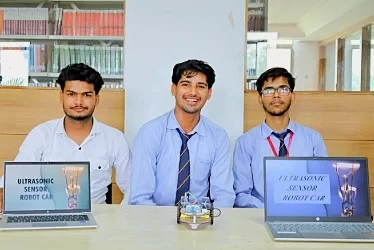
- Science Exhibitions: Students present innovative projects that demonstrate their understanding of scientific principles and their application to solving real-world problems. These exhibitions encourage teamwork, creativity, and effective communication.
- Quiz Competitions:
- UNDP Quiz: Focused on sustainable development goals and global challenges, encouraging students to think critically about pressing issues.
- IKS Quiz: This quiz celebrates India's knowledge systems and promotes an understanding of the country's rich scientific heritage.
- Quantum Graduate Aptitude Test (Q-GAT): A preparatory platform for national-level exams, providing students with exposure to competitive assessment formats.
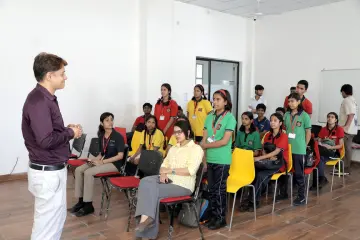
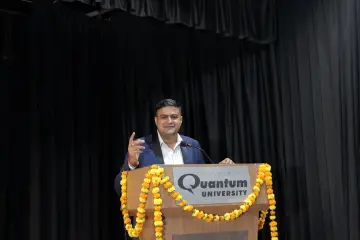
- Guest Lectures and Workshops: Regular Guest Lectures and workshops on topics like Quantum Computing, nanotechnology, renewable energy, and Water quality monitoring sessions keep students updated with the latest advancements in science and technology.
Field Trips & Industrial Visits
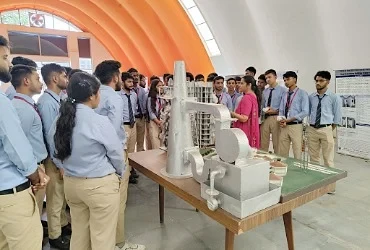
Field trips and industrial visits provide students with direct exposure to professional environments, enriching their academic learning with practical insights. The Department of Sciences organizes visits to renowned institutes and industries, enabling students to understand the application of scientific theories in real-world settings.
Wadia Institute of Himalayan Geology, Dehradun: Students explore geological phenomena and learn about ongoing research in seismology, paleontology, and Himalayan tectonics.
FTIR, Dehradun: This visit introduces students to advanced spectroscopic techniques used for molecular characterization.
National Institute of Hydrology (NIH), Roorkee: Focused on water resource management, these visits provide insights into hydrological research and innovations.
Central Building Research Institute (CBRI), IIT Roorkee: Students gain exposure to cutting-edge research in sustainable construction materials and disaster-resistant infrastructure.
CSIR Labs, IIT Roorkee: Engagement with pioneering research in various scientific domains fosters an appreciation for interdisciplinary approaches.
ONGC Oil Museum, Dehradun: An exploration of India's energy sector, this visit highlights the processes involved in oil exploration and production.
Interdisciplinary Research Projects and Dissertations
The Department of Sciences emphasizes research as a key component of experiential learning. Final-year students undertake interdisciplinary projects that encourage critical thinking and innovation.
Examples of Research Projects:
- Development of eco-friendly materials for water purification.
- Studies on the impact of climate change on local biodiversity.
- Applications of nanotechnology in medicine and agriculture.
- Renewable energy solutions for rural electrification.
Dissertation Process: Guided by experienced faculty, students identify research problems, design experiments, analyze data, and present findings, culminating in a comprehensive dissertation that reflects their academic rigor.
Collaborating with NGOs for Community Service Engagement
Community engagement is an essential aspect of holistic education. The Department collaborates with various NGOs to involve students in meaningful service-learning projects.
Activities Include:
- Conducting science workshops for underprivileged school children.
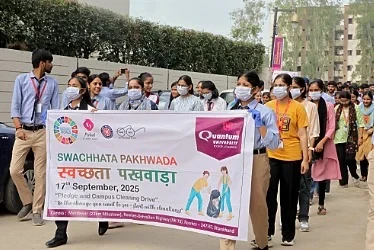
- Participating in environmental conservation initiatives such as tree plantation drives and river clean-up campaigns.
- Developing low-cost scientific tools and teaching aids for rural schools.
These initiatives not only enhance students' understanding of societal challenges but also instil a sense of responsibility and empathy.
Laboratory Trainings
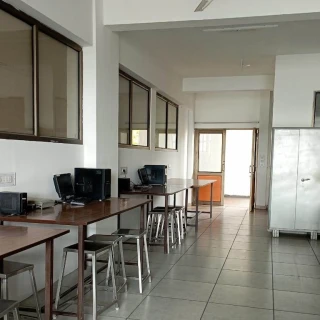
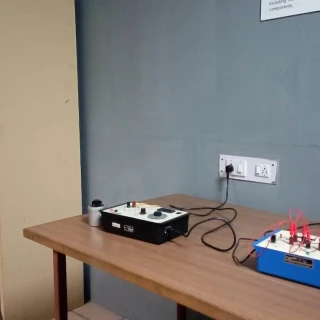
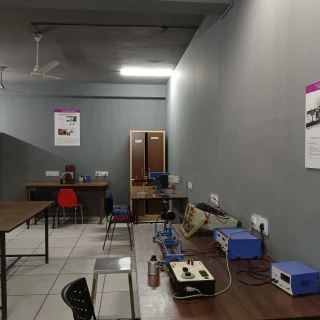
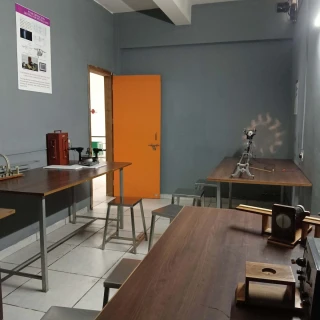
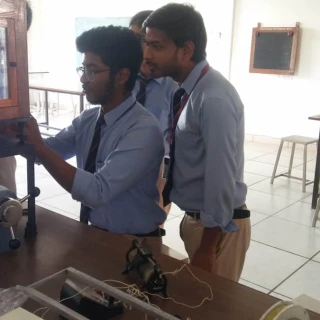
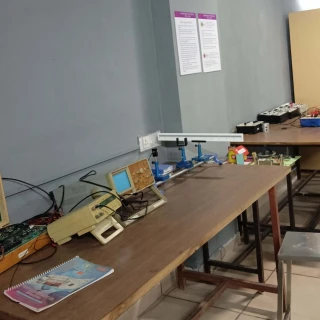
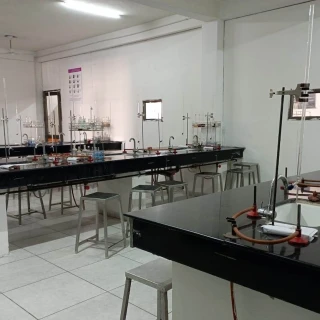
Hands-on laboratory training is fundamental to the undergraduate science curriculum. The Department provides state-of-the-art facilities for experimentation and learning.
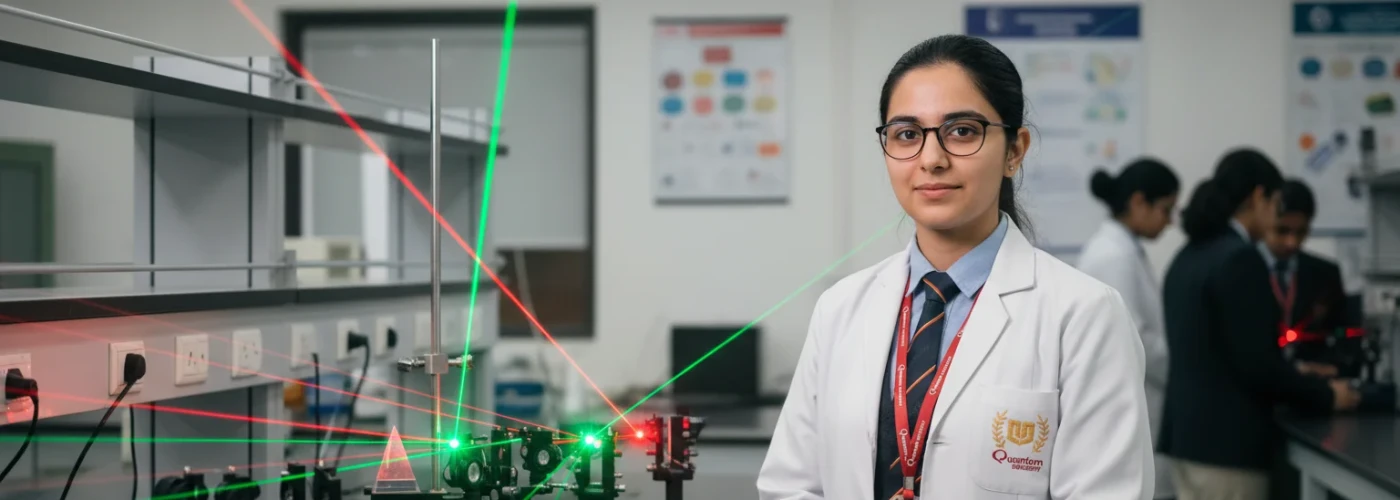
Physics Lab: Students explore concepts such as optics, electromagnetism, and quantum mechanics through experiments that enhance their analytical skills and technical competence.
Chemistry Lab: Focus areas include organic synthesis, analytical techniques, and environmental chemistry, equipping students with practical skills relevant to industry and research.
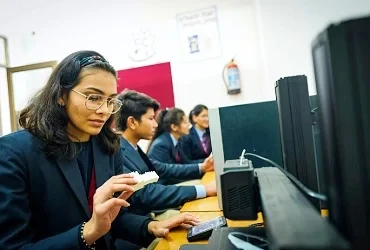
Virtual Labs: Through virtual lab platforms, students simulate complex experiments, gaining a deeper understanding of theoretical concepts while minimizing resource constraints.


 Undergraduate
 Postgraduate


 Career Tracks
  Entrepreneurship
 Higher Studies