tr
M.Sc (Mathematics)

M.Sc (Mathematics)

The M.Sc in Mathematics program at Quantum University is a meticulously designed postgraduate course that offers an in-depth exploration of advanced mathematical concepts, theories, and real-world applications. Recognized as one of the top universities in India for mathematics education, Quantum University provides a curriculum that combines rigorous academic training with a strong focus on problem-solving techniques, preparing students for diverse roles in research, academia, and industry. The program covers specialized areas such as algebra, topology, real and complex analysis, functional analysis, and mathematical modeling, ensuring students acquire a well-rounded understanding of both pure and applied mathematics. With access to state-of-the-art facilities and experienced faculty, students engage in research-driven learning, gaining exposure to mathematical simulations, interdisciplinary projects, and advanced computational techniques. This program not only enhances analytical and reasoning skills but also encourages innovation and critical thinking, vital for addressing complex challenges in technology, finance, and science. Graduates from Quantum University are well-prepared to excel in data science, actuarial science, operations research, and financial engineering roles, as well as in academic and research-focused careers. By integrating a balance of theoretical knowledge and practical applications, Quantum University ensures its students emerge as leaders in mathematics, ready to contribute to India's growing demand for skilled mathematicians in various fields.

icon 09

Advanced Curriculum

Offers in-depth study of algebra, topology, real and complex analysis, functional analysis, and mathematical modeling, building a robust foundation in both pure and applied mathematics.

icon 02

Research Opportunities

Encourages active participation in research projects, interdisciplinary studies, and mathematical simulations, enhancing analytical, reasoning, and problem-solving skills.

icon 04

Practical Exposure

Provides hands-on experience with advanced computational techniques, mathematical tools, and applications in fields such as finance, technology, and scientific research.

icon 07

Diverse Career Pathways

Prepares graduates for roles as data scientists, actuaries, operations researchers, academic professionals, or specialists in financial engineering, catering to India's growing need for expertise in mathematics-driven fields.

Program Overview

The M.Sc in Mathematics program at Quantum University bridges the gap between theoretical mathematics and its practical applications, equipping students to solve complex problems in areas like technology, finance, and scientific research. The curriculum encompasses advanced topics such as functional analysis, topology, algebra, real and complex analysis, and numerical methods, providing a comprehensive understanding of core and applied mathematics. Students gain hands-on experience through research projects, mathematical simulations, and interdisciplinary studies, preparing them to meet the challenges of modern industries and academia. With a focus on innovation, critical thinking, and problem-solving, the program fosters skills essential for tackling global and local challenges. Recognized among the best mathematics programs in India, Quantum University offers its graduates a competitive edge for pursuing careers in data analytics, actuarial science, operations research, and advanced academic roles. This research-oriented approach ensures students are well-equipped for higher studies or professional pursuits in diverse and emerging fields.

Program Structure

Content

Teaching & Assessment

Content

Curriculum

  • Theory of Real Functions
  • Differential Geometry
  • Finite Elements Analysis
  • R Programming for Mathematics
  • R Programming for Mathematics Lab
  • Seminar
  • Mathematical Modelling
  • Research Methodology
  • Scientific Computing Using Matlab
  • Scientific Computing Using Matlab Lab
  • Probability & Statistical Applications
  • Project and Dissertation
  • Research Methodology-II
  • Advanced Graph Theory
  • Algebraic Topology
  • Fourier Analysis
  • Python Programming
  • Python Programming Lab
  • Electives-I:
  • Representation of Finite Groups
  • Advanced Group Theory
  • Algebraic Number Theory
  • Operators on Hardy Hilbert Spaces
  • Topological-II
  • Optimization Theory
  • Computational Methods for PDE
  • Computational Methods for PDE Lab
  • Electives-II:
  • Advanced Fluid Dynamics
  • Advanced Measure Theory

Program Outcomes

Program Educational Objectives (PEO's)
PEO1
Graduates will acquire deep theoretical and practical knowledge in mathematics, enabling them to pursue research, teaching, or advanced careers in academia, industry, or government sectors.
PEO2
Graduates will develop analytical and computational skills to model, analyze, and solve complex real-world problems using mathematical tools and techniques.
PEO3
Graduates will engage in lifelong learning, ethical practices, and interdisciplinary collaboration, contributing effectively to scientific, educational, and technological advancements.
Program Specific Outcomes (PSO's)
PSO1
Apply advanced mathematical concepts in algebra, analysis, topology, and applied mathematics to solve theoretical and practical problems.
PSO2
Formulate mathematical models, conduct independent research, and interpret results using analytical and computational techniques.
PSO3
Utilize modern mathematical software and tools for data analysis, simulations, and problem-solving in academic and professional settings.
Program Outcomes (PO's)
PO-01 Core Knowledge
Demonstrate comprehensive understanding of advanced mathematical theories and principles across various domains.
PO-02 Problem Solving
Apply mathematical reasoning to analyze, model, and solve complex real-world problems.
PO-03 Research Skills
Develop and conduct research using analytical, numerical, and computational methods.
PO-04 Data Interpretation
Interpret mathematical data and results with accuracy, drawing meaningful conclusions from complex quantitative information.
PO-05 Computational Proficiency
Use mathematical software and programming tools to solve equations, analyze data, and simulate models.
PO-06 Critical Thinking
Analyze assumptions, evaluate arguments, and synthesize solutions using logical and abstract thinking.
PO-07 Communication Skills
Communicate mathematical ideas and research findings effectively through written, oral, and graphical presentations.
PO-08 Ethics and Responsibility
Understand professional ethics and responsibilities in physics and apply them in research and professional practices.
PO-09 Individual and Team Work
Work effectively as an individual and in multidisciplinary teams to achieve common goals.
PO-10 Lifelong Learning
Recognize the importance of and engage in continuous learning to stay updated with scientific advancements.
PO-11 Project Management
Apply project management principles and mathematical knowledge to plan, execute, and evaluate scientific projects.
PO-12 Societal Impact
Understand the role of Mathematics in societal and environmental contexts, and contribute to sustainable development.

Minor Degree Programs

At Quantum University, students have the freedom to expand their academic horizons beyond their core area of study. Through minor programs, they can choose courses from related or entirely different disciplines, encouraging interdisciplinary learning and personal growth. This flexible approach empowers students to design a well-rounded education, explore new interests, and develop diverse skill sets that prepare them for dynamic career opportunities.

Some of the MINOR Degrees being offered are:

  • Entrepreneurship & Startups
  • Foreign languages (French)
  • Media Management
  • Financial Literacy
  • Robotics & Automation
  • Microsoft Office
  • Culinary Arts
  • Data Analytics
  • Web Designing
Explore More

Experiential Learning

Experiential learning is integral to education at Quantum University, Roorkee, particularly in the Department of Sciences. The primary objective is to bridge the gap between theoretical knowledge and practical applications, fostering critical thinking, innovation, and problem-solving skills among undergraduate students. Through this immersive approach, students gain hands-on experience, which enhances their understanding of complex scientific concepts, strengthens their technical proficiency, and prepares them for diverse career paths.

Key goals include:

  • Enhancing students' ability to apply scientific principles in real-world contexts.
  • Encouraging collaborative learning and teamwork.
  • Cultivating a sense of curiosity and a lifelong passion for science.
  • Providing exposure to cutting-edge research and technological advancements.

Technical Events under Kalp Science Society

Technical Events under Kalp Science Society

The Kalp Science Society is the cornerstone of technical and co-curricular activities within the Department of Sciences. Its events are designed to spark curiosity, foster creativity, and provide a platform for showcasing talent.

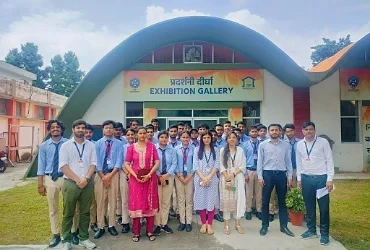
  1. Science Exhibitions: Students present innovative projects that demonstrate their understanding of scientific principles and their application to solving real-world problems. These exhibitions encourage teamwork, creativity, and effective communication.
  2. Quiz Competitions:
    • UNDP Quiz: Focused on sustainable development goals and global challenges, encouraging students to think critically about pressing issues.
    • IKS Quiz: This quiz celebrates India's knowledge systems and promotes an understanding of the country's rich scientific heritage.
    • Quantum Graduate Aptitude Test (Q-GAT): A preparatory platform for national-level exams, providing students with exposure to competitive assessment formats.
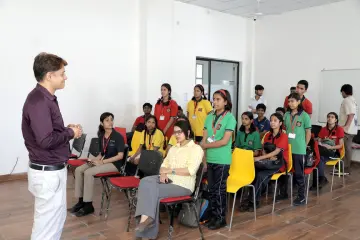
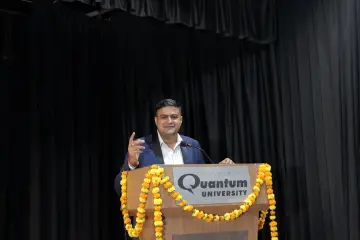
  3. Guest Lectures and Workshops: Regular Guest Lectures and workshops on topics like Quantum Computing, nanotechnology, renewable energy, and Water quality monitoring sessions keep students updated with the latest advancements in science and technology.

Field Trips & Industrial Visits

Field Trips & Industrial Visits

Field trips and industrial visits provide students with direct exposure to professional environments, enriching their academic learning with practical insights. The Department of Sciences organizes visits to renowned institutes and industries, enabling students to understand the application of scientific theories in real-world settings.

Wadia Institute of Himalayan Geology, Dehradun: Students explore geological phenomena and learn about ongoing research in seismology, paleontology, and Himalayan tectonics.

FTIR, Dehradun: This visit introduces students to advanced spectroscopic techniques used for molecular characterization.

National Institute of Hydrology (NIH), Roorkee: Focused on water resource management, these visits provide insights into hydrological research and innovations.

Central Building Research Institute (CBRI), IIT Roorkee: Students gain exposure to cutting-edge research in sustainable construction materials and disaster-resistant infrastructure.

CSIR Labs, IIT Roorkee: Engagement with pioneering research in various scientific domains fosters an appreciation for interdisciplinary approaches.

ONGC Oil Museum, Dehradun: An exploration of India's energy sector, this visit highlights the processes involved in oil exploration and production.

Interdisciplinary Research Projects and Dissertations

Interdisciplinary Research Projects and Dissertations

The Department of Sciences emphasizes research as a key component of experiential learning. Final-year students undertake interdisciplinary projects that encourage critical thinking and innovation.

Examples of Research Projects:

  • Development of eco-friendly materials for water purification.
  • Studies on the impact of climate change on local biodiversity.
  • Applications of nanotechnology in medicine and agriculture.
  • Renewable energy solutions for rural electrification.

Dissertation Process: Guided by experienced faculty, students identify research problems, design experiments, analyze data, and present findings, culminating in a comprehensive dissertation that reflects their academic rigor.

Collaborating with NGOs for Community Service Engagement

Collaborating with NGOs for Community Service Engagement

Community engagement is an essential aspect of holistic education. The Department collaborates with various NGOs to involve students in meaningful service-learning projects.

Activities Include:

  • Conducting science workshops for underprivileged school children.
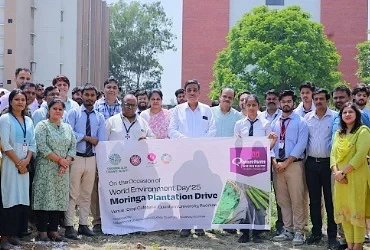
  • Participating in environmental conservation initiatives such as tree plantation drives and river clean-up campaigns.
  • Developing low-cost scientific tools and teaching aids for rural schools.

These initiatives not only enhance students' understanding of societal challenges but also instil a sense of responsibility and empathy.

Laboratory Trainings

Laboratory Trainings

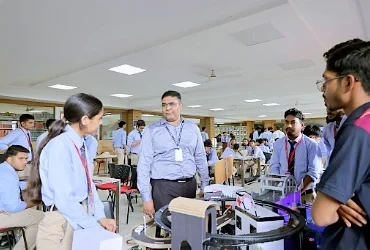
Hands-on laboratory training is fundamental to the undergraduate science curriculum. The Department provides state-of-the-art facilities for experimentation and learning.

Physics Lab: Students explore concepts such as optics, electromagnetism, and quantum mechanics through experiments that enhance their analytical skills and technical competence.

Chemistry Lab: Focus areas include organic synthesis, analytical techniques, and environmental chemistry, equipping students with practical skills relevant to industry and research.

Virtual Labs: Through virtual lab platforms, students simulate complex experiments, gaining a deeper understanding of theoretical concepts while minimizing resource constraints.

Outstanding Career Outcomes

Our graduates are in high demand across top engineering companies and innovative startups


  • LPAHIGHEST PACKAGE OFFERED
  •  NUMBER OF COMPANIES VISITED
  •  NUMBER OF STUDENTS PLACED
  • LPAAVERAGE PACKAGE OFFERED

Career Tracks

Research Scientist

Advanced experimentation and discovery.

Lecturer

Teaching in colleges and universities.

Lab Manager

Oversight of equipment and lab safety.

Data Analyst

Statistical and computational research.

Career Tracks
2
Career Tracks
Career Tracks
Career Tracks
Career Tracks
Career Tracks
Career Tracks
Career Tracks
bhm
bhm2
health

Entrepreneurship

Comprehensive Skill Development: At Quantum University, the teaching methodology includes extensive Skill Development Courses (SKCs) designed to equip students with the necessary skills to start their own ventures.

Entrepreneurial and Leadership Opportunities: Quantum University is providing ample opportunities to students to start their own ventures. More than 100 Start-ups are in progress.

Networking and Career Success: Quantum University fosters strong industry connections and real-world exposure, enabling students to build professional networks and unlock rewarding career opportunities.

Entrepreneurship
Entrepreneurship
Entrepreneurship
Entrepreneurship
Entrepreneurship
Entrepreneurship
Entrepreneurship
Entrepreneurship
Entrepreneurship
Entrepreneurship
Entrepreneurship
Entrepreneurship

Higher Studies

Master’s Programs: Quantum University offers a range of industry-relevant master's programs designed to deepen academic knowledge, enhance professional skills, and prepare students for leadership roles in their chosen fields.

Ph.D. Opportunities: Quantum University offers rigorous Ph.D. programs that foster advanced research, innovation, and academic excellence. With expert mentorship, interdisciplinary collaboration, and access to cutting-edge resources, scholars are empowered to contribute meaningful insights to their fields.

Networking and Career Success: Students benefit from a strong ecosystem of industry partnerships, alumni networks, and career development support. Regular workshops, internships, expert talks, and placement drives help students build valuable connections and achieve long-term career success.

Higher Studies
Higher Studies

Higher Studies

Higher Studies

Higher Studies

Higher Studies

Higher Studies

Higher Studies

Higher Studies

Higher Studies

health
rr

Mentors Who Shape Futures

rupali mishra
Dr. Rupali Mishra
Assistant Professor
Profile
gunjan agarwal
Dr. Gunjan Agarwal
Assistant Professor
Profile
ajay kumar sharma
Dr. Ajay Kumar Sharma
Assistant Professor
Profile
nishant khandelwal
Dr. Nishant Khandelwal
Assistant Professor
Profile
surendra singh
Dr. Surendra Singh
Assistant Professor
Profile
ak seth
Dr. Ashok Kumar Seth
Assistant Professor
Profile
dr  shaily chaudhray
Dr. Shaily Choudhary
Assistant Professor
Profile
abhishek agarwal
Abhishek Agarwal
Assistant Professor
Profile
manisha dhami
Manisha Dhami
Assistant Professor
Profile
vipin kumar
Vipin Kumar
Assistant Professor
Profile

Research Highlights

Quantum University fully supports and encourages interdisciplinary research initiatives across different areas of study.

  • +Paper Publications
  • +Patents
  • +Startup Grants

Industry -Academic Collaborations

Quantum University has partnerships with over 150 industry leaders, providing students with valuable practical experience and exposure to current industry trends. Companies offer internships, real-world projects, and job opportunities to over 900 students annually at the best packages.


comp 04
comp 05
comp 06
comp 07
comp 08
comp 10
comp 11
comp 12


Learning Experience

curriculum

CURRICULUM

interdisciplinary

INTERDISCIPLINARY

passion programs 2

PASSION PROGRAMS (PROPS)