


 Undergraduate
 Postgraduate
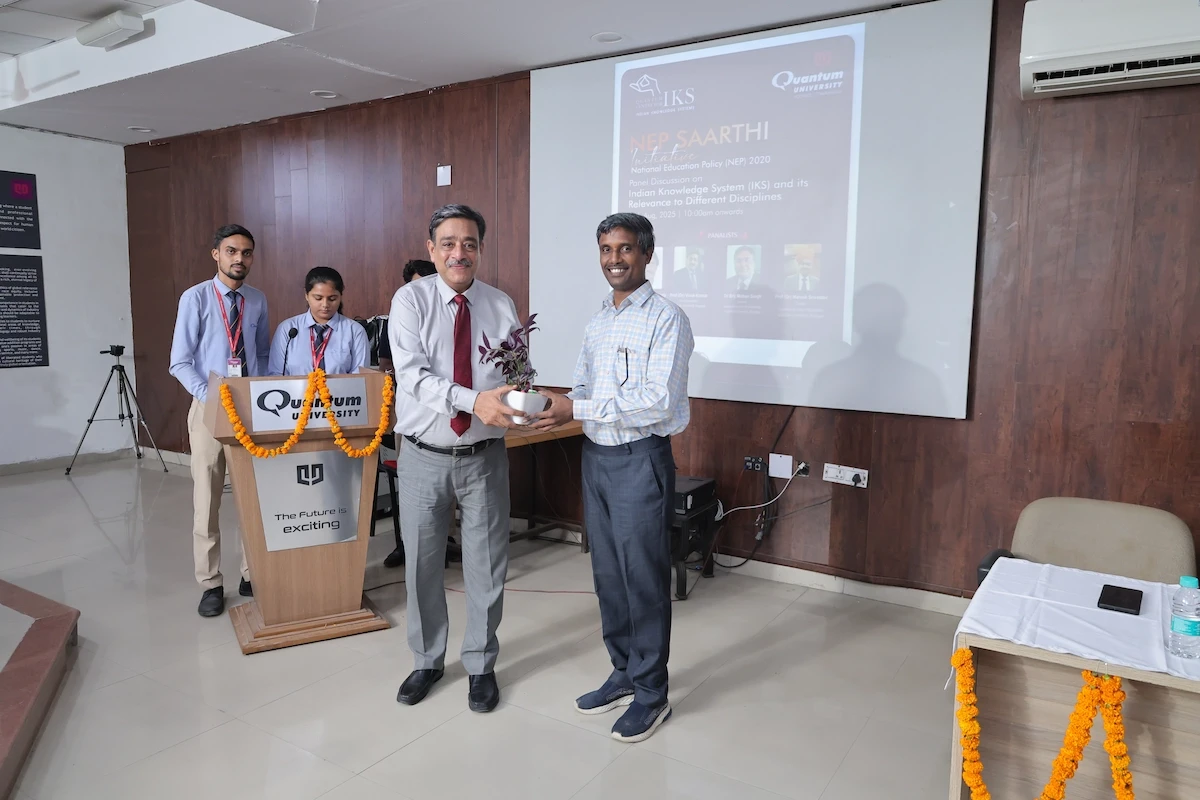
Roorkee, August 30, 2025 – As part of the NEP SAARTHI Initiative (National Education Policy 2020), Quantum University, Roorkee, organized an enriching Panel Discussion on “Indian Knowledge System (IKS) and its Relevance to Different Disciplines.” The event brought together eminent academicians, university leaders, faculty, and students to explore how India’s timeless intellectual traditions can be integrated into modern education to foster innovation, sustainability, and holistic growth.
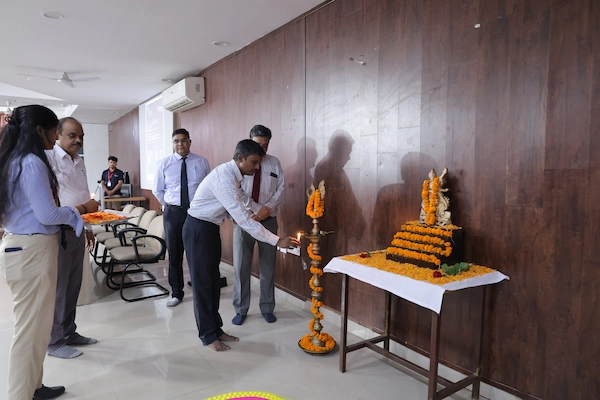
A Step Towards Holistic Education
The program began with a welcome address by the organizing committee, which set the tone by emphasizing the vision of NEP 2020. Speakers highlighted the importance of revisiting India’s traditional wisdom, aligning it with scientific methods, and nurturing innovation rooted in cultural values and indigenous practices. The vibrant atmosphere reflected the university’s commitment to bridging heritage and modernity in education.
Insights from the Panelists
The panel discussion featured thought leaders and domain experts who shared diverse perspectives on the relevance of IKS in today’s academic and professional world:
Prof. Anil Kumar Gourishetty, Professor & Head, Center for IKS, IIT Roorkee
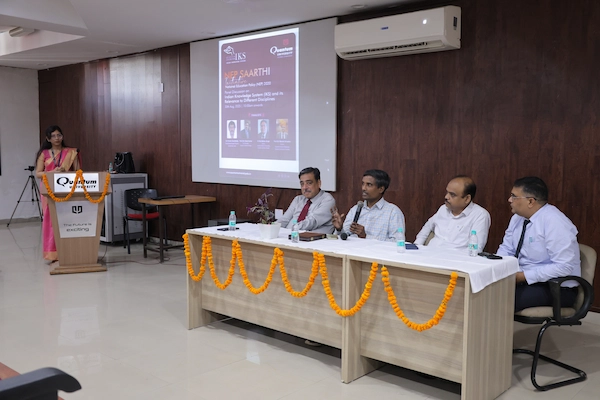
- Traced the historical evolution of IKS, highlighting contributions in mathematics, architecture, Ayurveda, metallurgy, and environmental sciences.
- Explained the scientific foundation of traditional practices and their potential in modern research.
- Stressed the importance of IKS in building a self-reliant India (Atmanirbhar Bharat).
Prof. (Dr.) Vivek Kumar, Vice Chancellor, Quantum University, Roorkee
- Focused on the integration of IKS into higher education curricula as envisioned in NEP 2020.
- Highlighted Quantum University’s initiatives in incorporating Indian philosophy, ethics, and indigenous knowledge into academics and co-curricular activities.
- Urged the fusion of global knowledge with local wisdom for student empowerment.
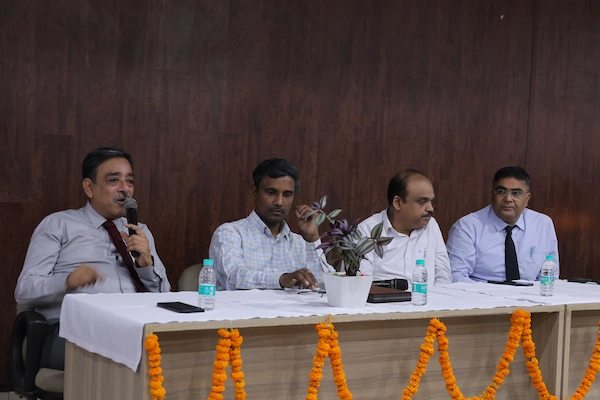
Dr. Brij Mohan Singh, Director, Quantum School of Technology, Quantum University
- Illustrated applications of IKS in science, technology, civil engineering, and sustainable architecture.
- Presented real-world case studies on traditional building techniques, water management, and renewable energy concepts rooted in Indian traditions.
- Encouraged students to pursue research projects inspired by IKS.
Prof. (Dr.) Manish Srivastav, Director, Quantum School of Business, Quantum University
- Explored the role of IKS in business, management, and entrepreneurship.
- Referred to ethical principles from ancient texts like the Arthashastra and their relevance to modern corporate governance.
- Advocated for value-based leadership that prepares students for global challenges.
Student and Faculty Engagement
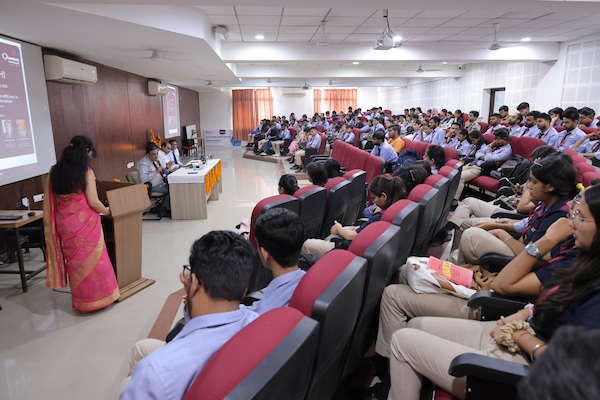
The session was highly interactive, with students and faculty members actively engaging in the discussions. Students posed questions on the practical application of IKS in modern industries, research collaborations, and its recognition at the global level. Faculty members also contributed by sharing perspectives on weaving IKS into classroom learning and interdisciplinary projects.
Key Outcomes of the Event
- Awareness Building: Enhanced understanding of the cultural, scientific, and ethical dimensions of IKS.
- Curriculum Integration: Recommendations to introduce IKS modules, seminars, and research projects across academic programs.
- Research Opportunities: Encouragement for student-led innovations based on IKS principles.
- Collaboration: A promising pathway for future partnerships between IIT Roorkee and Quantum University in advancing IKS-focused initiatives.
Conclusion
The panel discussion under the NEP SAARTHI Initiative served as a powerful platform for knowledge sharing and collaboration. It reaffirmed the relevance of Indian Knowledge Systems in today’s interdisciplinary education and highlighted how blending traditional wisdom with modern disciplines can lead to innovation, sustainability, and holistic learning.
The event concluded with a vote of thanks to the esteemed panelists, dignitaries, and participants for contributing to a highly successful and impactful discussion.
