tr
Civil Engineering

Civil Engineering

The Diploma in Civil Engineering program at Quantum University, recognized as one of the top universities in India, is designed to provide students with a strong foundation in the design, construction, and maintenance of essential infrastructure. As India experiences rapid urbanization and infrastructural growth, skilled civil engineers are in high demand to contribute to the development of smart cities, transportation networks, and sustainable buildings. This program is ideal for students who aspire to play a vital role in shaping India's infrastructure sector by acquiring technical knowledge and practical expertise.

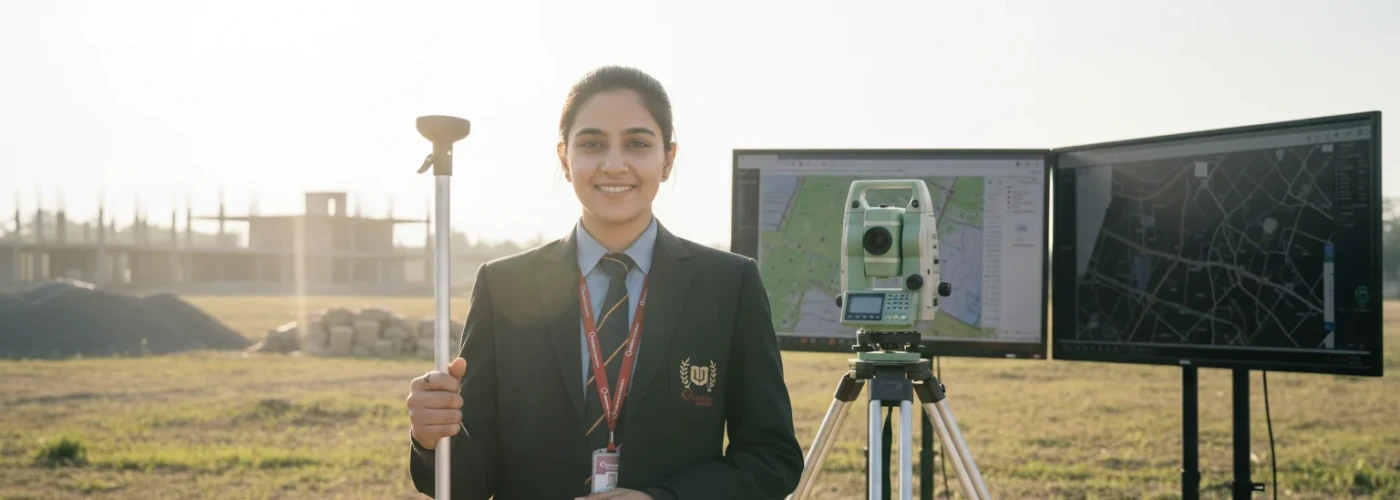
The curriculum is thoughtfully crafted to cover key aspects of civil engineering, such as structural analysis, geotechnical engineering, surveying techniques, material testing, and transportation engineering. Students also gain hands-on experience with tools like Computer-Aided Design (CAD), enabling them to create accurate engineering designs and drafts. The program emphasizes construction management and sustainability, ensuring that students are prepared to tackle modern challenges in the civil engineering industry.

Through a blend of classroom learning, lab training, and field exposure, students are equipped with the skills to plan, design, and execute infrastructure projects effectively. The program prepares graduates to excel in diverse roles, such as civil technicians, site supervisors, project assistants, and construction coordinators in public and private sectors. With Quantum University's focus on practical training, innovation, and industry relevance, diploma holders are well-prepared to meet the growing demands of India's infrastructure development initiatives.

icon 09

Practical Learning

Gain hands-on training in surveying, drafting, CAD (Computer-Aided Design), and construction management, enabling students to handle real-world projects with confidence.

icon 02

Comprehensive Curriculum

Covers essential topics such as structural analysis, geotechnical engineering, transportation systems, building materials testing, and sustainable construction methods.

icon 04

Career Opportunities

Graduates can pursue careers as civil technicians, site supervisors, project assistants, or construction coordinators in India's growing infrastructure sector and internationally.

icon 07

Industry Relevance

Program aligns with India's urban development initiatives, such as the Smart Cities Mission, preparing students to contribute to modern infrastructure projects.

Program Overview

The Diploma in Civil Engineering at Quantum University provides students with the skills and knowledge needed to succeed in the dynamic field of civil engineering. The program focuses on equipping students with a balance of technical expertise and practical problem-solving skills, enabling them to effectively plan, design, and manage infrastructure projects.

Students gain hands-on experience through state-of-the-art labs, field projects, and real-world training, exploring areas like road construction, structural design, material testing, and surveying techniques. Emphasizing sustainability and innovation, the program ensures that graduates can address the challenges of modern constructionwhile meeting industry standards for quality and efficiency.

Recognized as one of the top engineering colleges in India, Quantum University ensures that diploma graduates are well-equipped to excel in their professional roles, contributing significantly to the development of smart cities, transportation infrastructure, and sustainable buildings. With a focus on industry alignment and practical training, this program prepares students to thrive in India's booming construction industry and make a lasting impact on nation-building initiatives.

Program Structure

Studying at one of the premier engineering institutions in Roorkee, Quantum University offers a Diploma in Civil Engineering program structured as per the guidelines of the National Education Policy (NEP) 2020. The program emphasizes flexibility, multidisciplinary learning, and employability. Students are required to fulfill a minimum of 120 credits, earned through a well-balanced structure divided into eight academic categories: Discipline Core (DC), Multidisciplinary Core (MDC), Ability Enhancement Courses (AEC), Skill Enhancement Courses (SEC), Value Added Courses (VAC), Internship & Capstone Project.

The curriculum is carefully designed to provide a strong foundation in civil engineering principles, blended with real-time field exposure and digital competency. Key focus areas include Construction Technology, Structural Detailing, Surveying, Hydraulics, Green Building Practices, and Basic Digital Tools like AutoCAD and Revit. The program includes skill-based training, certified workshops, and mandatory internships to ensure that students graduate as technically competent and industry-ready professionals.

Teaching & Assessment

At Quantum University, the teaching pedagogy for the Diploma in Civil Engineering program is skill-oriented, experiential, and outcome-driven, in line with NEP 2020. The curriculum integrates theoretical instruction with practical exposure to ensure students can directly apply their classroom learning in real-world construction and infrastructure environments.

The curriculum is delivered through a blended teaching model that includes:

  • Classroom Lectures
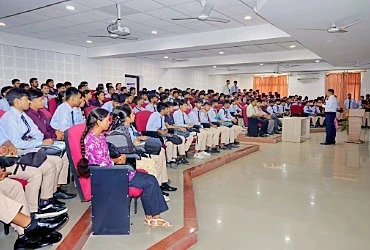
  • Expert Seminars & Technical Webinars
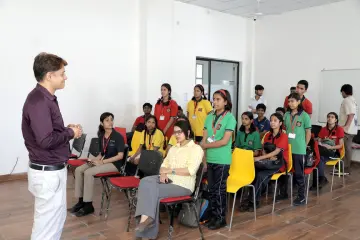
  • Skill Development Workshops and Hands-On Training
  • Mini Projects & Capstone Projects
  • Site Visits and Industrial Exposure
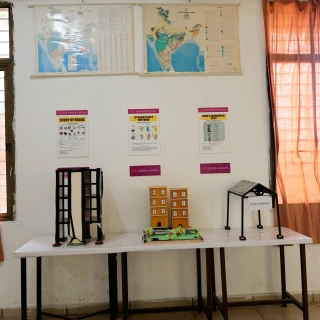
  • Student-led Exhibitions, Model Making, and Competitions

Our assessment strategy is both continuous and comprehensive, focusing on:

  • Internal assessments (quizzes, assignments, practicals)
  • Laboratory & Field Work Evaluations
  • Mid-semester and End-semester Exams
  • Internship Reports and Viva Voce
  • Final Year Capstone Project Evaluation
  • Digital Portfolio Reviews & Skill Certifications (AutoCAD, Surveying, Estimation)

With the integration of technology-based learning, field training, and project-based modules, the program actively engages students in building core competencies. Faculty members blend academic knowledge with professional insight to ensure students stay aligned with modern construction practices and sustainable engineering trends.

Curriculum

  • Introduction to English Communication
  • Applied Mathematics-I
  • Applied Chemistry
  • Foundation of Computer Science
  • Basics of Engineering Drawing
  • Engineering Workshop Practice
  • Electrical and Electronics Workshop
  • Applied Chemistry Lab
  • Foundation of Computer Science Lab
  • General Proficiency
  • English Communication & Soft Skills
  • Applied Mathematics-II
  • Applied Engineering Physics
  • Introduction to Environmental Studies
  • Introduction to Human Values & Ethics
  • Engineering Drawing
  • Applied Engineering Workshop
  • English Comm. & Soft Skills Lab
  • Applied Engineering Physics Lab
  • Mini Project Lab
  • General Proficiency
  • Mechanics of Fluids
  • Strength of Materials
  • Surveying I
  • Building Construction and Materials
  • Electrical & Mechanical Engineering System
  • Building Drawing
  • Mechanics of Fluids Lab
  • Strength of Material Lab
  • Building Construction and Materials Lab
  • Surveying Lab I
  • Electrical & Mechanical Engineering System Lab
  • Industrial Training Seminar 1
  • General Proficiency
  • Concrete Technology
  • Soil and Foundation Engineering
  • Water Supply and Waste Water Engineering
  • Irrigation Engineering
  • Surveying II
  • Concrete Technology Lab
  • Soil and Foundation Engineering Lab
  • Water Supply and Waste Water Engineering Lab
  • Surveying Lab II
  • Computerized Drafting
  • General Proficiency
  • Reinforced Concrete Design
  • Transportation Engineering
  • Hilly Area Construction Technology
  • Quantity Surveying & Valuation
  • Repair & Maintenance of Buildings
  • Employability Skills
  • Transportation Engineering Lab
  • Repair and Maintenance of Building Lab
  • Quantity Surveying Lab
  • Computerized Survey
  • Project Stage 1
  • Industrial Seminar II
  • General Proficiency
  • Steel Structure Design
  • Earthquake Resistant Building Construction
  • Construction Technology & Management
  • Environment Pollution Control
  • Entrepreneurship Development & Management
  • Structure Drawing
  • Composite Materials Lab
  • Project

Program Outcomes

Program Educational Objectives (PEO's)
PEO1
Apply fundamental technical knowledge and skills to overcome technological challenges and problems in core and allied areas of civil engineering in their career.
PEO2
To exhibit leadership capability, triggering social and economical commitment and inculcate community services and protect environment
PEO3
Enhance their professional career through continual learning to take-up challenging task in the organization they work or pursue higher education or be an entrepreneur.
Program Specific Outcomes (PSO's)
PSO1
To know basic computing, mathematics and engineering fundamentals required to Design, perform fabrication, test, operation, or documentation of basic civil engineering systems or processes.
PSO2
An ability to understand working of various civil equipment’s and machines to engage in manufacturing or processing a product to meet the specified needs with appropriate consideration for safety, social and environmental aspects.
Program Outcomes (PO's)
PO-01
Basic and Engineering domain knowledge:Basic and Engineering domain knowledge An ability to apply knowledge of basic mathematics, science and engineering to solve the broadly defined Civil engineering problems.
PO-02
Engineering Tools, Experiments and practice:An ability to apply the knowledge, techniques, skills, and tools of their discipline to perform engineering technology activities.
PO-03
The Engineer and society: Demonstrate knowledge to assess societal, health, safety, legal and cultural issues and the consequent responsibilities relevant to engineering practice.
PO-04
Environment and sustainability:Understand the impact of the engineering solutions in societal and environmental contexts, and demonstrate the knowledge and need for sustainable development
PO-05
Communication: Ability to written, oral, and graphical communication in both technical and nontechnical environments and the ability to use appropriate technical literature.
PO-06
Ethics : Apply ethical principles and commit to professional ethics and responsibilities and norms of the engineering practice
PO-07
Individual and Team work:Function effectively as an individual, and as a member or leader in diverse/multidisciplinary teams
PO-08
Life-long learning :Recognize the need for, and have the preparation and ability to engage in independent and life-long learning in the context of technological changes

Minor Degree Programs

At Quantum University, students have the freedom to expand their academic horizons beyond their core area of study. Through minor programs, they can choose courses from related or entirely different disciplines, encouraging interdisciplinary learning and personal growth. This flexible approach empowers students to design a well-rounded education, explore new interests, and develop diverse skill sets that prepare them for dynamic career opportunities.

Some of the MINOR Degrees being offered are:

  • Entrepreneurship & Startups
  • Foreign languages (French)
  • Media Management
  • Financial Literacy
  • Robotics & Automation
  • Microsoft Office
  • Culinary Arts
  • Data Analytics
  • Web Designing
Explore More

Experiential Learning

Quantum University's 3-year Diploma in Engineering programs provide students with a strong foundation in technical skills, practical knowledge, and industry-relevant expertise. Designed to meet the demands of the rapidly evolving engineering industry, these programs prepare students for a variety of career opportunities or further studies. With specializations in disciplines such as Mechanical Engineering, Civil Engineering, Electrical Engineering, Electronics & Communication Engineering, and Computer Science & Engineering, the diploma programs emphasize hands-on learning, innovation, and problem-solving.

Practical Workshops

Practical Workshops

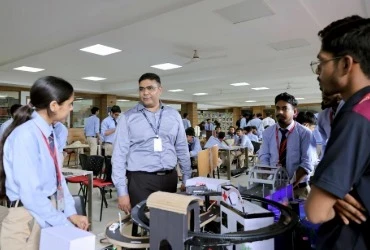
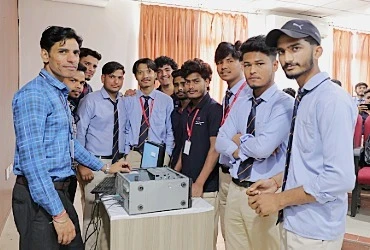
Workshops are a cornerstone of the diploma programs, offering students hands-on training in areas like circuit design, welding, CAD software, CNC machining, and robotics. These sessions are conducted in state-of-the-art laboratories and workshops, enabling students to gain practical skills that are directly applicable to the industry. By working on real-world problems, students develop technical proficiency and confidence in their craft.

Live Projects

Live Projects

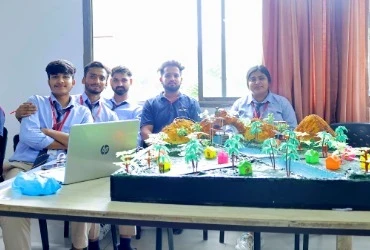
Diploma students are encouraged to undertake live projects that involve designing, testing, and implementing engineering solutions. These projects span diverse areas such as building prototypes, constructing small-scale structures, developing electrical systems, or creating IoT-enabled devices. Through these projects, students apply theoretical knowledge to practical applications, fostering creativity and innovation.

Technical Competitions

Technical Competitions

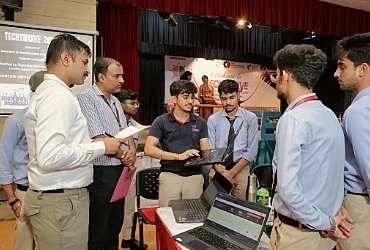
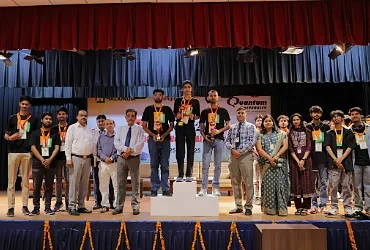
Diploma students are encouraged to participate in technical competitions such as model-making, design challenges, and robotics contests. These events, organized by the university and external bodies, allow students to demonstrate their skills, innovate solutions, and collaborate with peers. Competitions foster a sense of achievement, enhance teamwork, and develop problem-solving abilities.

Certification Programs

Certification Programs

To enhance employability, the diploma programs offer certification courses in tools and technologies relevant to each specialization. Examples include AutoCAD for Mechanical and Civil Engineering students, MATLAB for Electrical and Electronics students, and programming languages for Computer Science students. These certifications provide students with an additional edge in the competitive job market.

Hands-On Laboratory Experience

Hands On Laboratory Experience

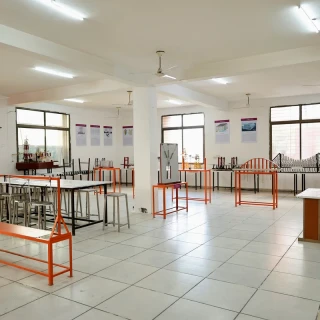
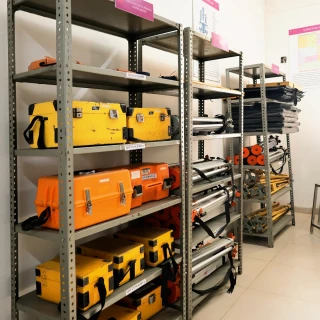
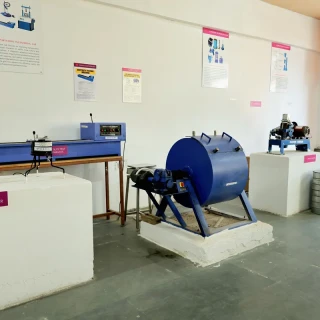
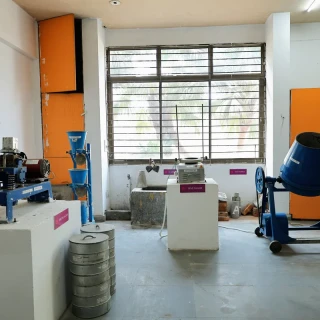
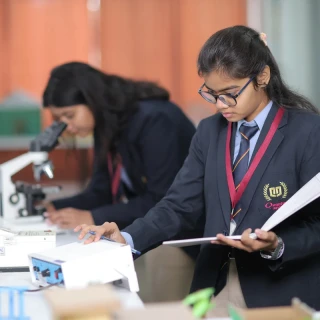
Each specialization includes extensive lab-based training where students work with modern equipment and tools. From material testing in Civil Engineering to circuit analysis in Electronics and Communication, students gain practical experience that strengthens their theoretical understanding. Regular lab sessions ensure that students are industry-ready by the time they graduate.

Soft Skills Development

Soft Skills Development

In addition to technical training, diploma programs at Quantum University emphasize the development of soft skills such as communication, teamwork, and time management. Through group projects, presentations, and workshops, students build interpersonal skills that are essential for professional success.

Outstanding Career Outcomes

Our graduates are in high demand across top engineering companies and innovative startups


  • LPAHIGHEST PACKAGE OFFERED
  •  NUMBER OF COMPANIES VISITED
  •  NUMBER OF STUDENTS PLACED
  • LPAAVERAGE PACKAGE OFFERED

Career Tracks

Junior Site Engineer

Assisting in construction and site supervision.

Draftsman

Preparation of civil layouts and plans.

Survey Assistant

Land surveying and data recording.

Construction Technician

Execution and material supervision.

Career Tracks
2
Career Tracks
Career Tracks
Career Tracks
Career Tracks
Career Tracks
Career Tracks
Career Tracks
bhm
bhm2
health

Entrepreneurship

Comprehensive Skill Development: At Quantum University, the teaching methodology includes extensive Skill Development Courses (SKCs) designed to equip students with the necessary skills to start their own ventures.

Entrepreneurial and Leadership Opportunities: Quantum University is providing ample opportunities to students to start their own ventures. More than 100 Start-ups are in progress.

Networking and Career Success: Quantum University fosters strong industry connections and real-world exposure, enabling students to build professional networks and unlock rewarding career opportunities.

Entrepreneurship
Entrepreneurship
Entrepreneurship
Entrepreneurship
Entrepreneurship
Entrepreneurship
Entrepreneurship
Entrepreneurship
Entrepreneurship
Entrepreneurship
Entrepreneurship
Entrepreneurship

Higher Studies

Master’s Programs: Quantum University offers a range of industry-relevant master's programs designed to deepen academic knowledge, enhance professional skills, and prepare students for leadership roles in their chosen fields.

Ph.D. Opportunities: Quantum University offers rigorous Ph.D. programs that foster advanced research, innovation, and academic excellence. With expert mentorship, interdisciplinary collaboration, and access to cutting-edge resources, scholars are empowered to contribute meaningful insights to their fields.

Networking and Career Success: Students benefit from a strong ecosystem of industry partnerships, alumni networks, and career development support. Regular workshops, internships, expert talks, and placement drives help students build valuable connections and achieve long-term career success.

Higher Studies
Higher Studies

Higher Studies

Higher Studies

Higher Studies

Higher Studies

Higher Studies

Higher Studies

Higher Studies

Higher Studies

health
rr

Mentors Who Shape Futures

karan babbar
Dr. Karan Babbar
Associate Professor
Profile
akash saini
Akash Saini
Assistant Professor
Profile
mohit kumar
Mohit Kumar
Assistant Professor
Profile
pankaj mishra
Pankaj Mishra
Assistant Professor
Profile
preeti bisht
Preeti Bisht
Assistant Professor
Profile
smita
Smita Dobhal
Assistant Professor
Profile
sunita danu
Sunita Danu
Assistant Professor
Profile
yogesh panwar
Yogesh Panwar
Assistant Professor
Profile

Labs

Structural Analysis Lab

Structural Analysis Lab

Structural Analysis Lab
Engineering Survey Lab

Engineering Survey Lab

Engineering Survey Lab
Transportation Engineering Lab

Transportation Engineering Lab

Transportation Engineering Lab
3r5a6798

Geotechnical Engineering Lab

Geotechnical Engineering Lab
Concrete Technology Lab

Concrete Technology Lab

Concrete Technology Lab
3r5a6261

Environmental Engineering Lab

Environmental Engineering Lab
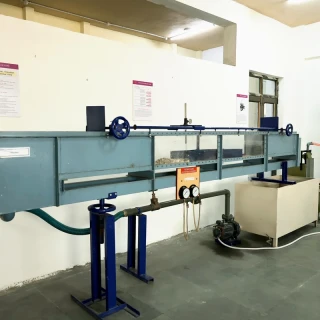
Fluid Mechanics & Hydraulics Lab

Fluid Mechanics & Hydraulics Lab

Fluid Mechanics & Hydraulics Lab
Structural Engineering Lab

Structural Engineering Lab

Structural Engineering Lab
Engineering Geology Lab

Engineering Geology Lab

Engineering Geology Lab
quantum engineering college

Computer-Aided Design (CAD) Lab

Computer-Aided Design (CAD) Lab

Research Highlights

Quantum University fully supports and encourages interdisciplinary research initiatives across different areas of study.

  • +Paper Publications
  • +Patents
  • +Startup Grants

Industry -Academic Collaborations

Quantum University has partnerships with over 150 industry leaders, providing students with valuable practical experience and exposure to current industry trends. Companies offer internships, real-world projects, and job opportunities to over 900 students annually at the best packages.



comp 04
comp 05
comp 06
comp 07
comp 08
comp 10
comp 11
comp 12


Learning Experience

curriculum

CURRICULUM

interdisciplinary

INTERDISCIPLINARY

passion programs 2

PASSION PROGRAMS (PROPS)