tr
B.Sc (Hons.) Mathematics

B.Sc (Hons.) Mathematics

The B.Sc (Hons.) in Mathematics program at Quantum University is an expertly designed undergraduate course aimed at students who are passionate about exploring the vast world of mathematical sciences and their applications in solving real-world problems. Recognized as one of the top universities in India for mathematics, Quantum University offers a cutting-edge curriculum that fosters critical thinking, analytical abilities, and problem-solving expertise. The program delves into advanced topics such as linear algebra, mathematical modeling, numerical analysis, and differential equations, providing students with a strong theoretical foundation. With a focus on blending academic rigor with practical exposure, students gain skills in quantitative reasoning, computational techniques, and data interpretation, making them valuable assets in diverse industries. The program is structured to meet the needs of India's growing demand for professionals skilled in data science, actuarial science, operations research, and other interdisciplinary domains. Students also benefit from hands-on projects, industry exposure, and opportunities to engage in innovative research. With access to experienced faculty, state-of-the-art resources, and a collaborative learning environment, Quantum University ensures that graduates are equipped to excel in advanced studies, competitive job markets, and entrepreneurial ventures. This program is ideal for individuals seeking to build a robust career in mathematics, finance, technology, and beyond, while contributing to innovation and problem-solving in India's dynamic economy.

>
icon 09

Comprehensive Curriculum

Offers in-depth coverage of linear algebra, differential equations, numerical analysis, and mathematical modeling, providing a strong theoretical foundation.

icon 02

Skill Enhancement

Focuses on quantitative reasoning, computational methods, data interpretation, and problem-solving techniques tailored to meet industry demands.

icon 04

Research and Practical Exposure

Encourages participation in research projects, workshops, and internships, bridging the gap between academic learning and real-world applications.

icon 07

Diverse Career Pathways

Equips graduates for careers in data science, actuarial science, operations research, cryptography, or advanced studies in mathematics and interdisciplinary sciences, addressing the needs of India's innovation-driven economy.

Program Overview

The B.Sc (Hons.) in Mathematics program at Quantum University is structured to provide students with a comprehensive understanding of theoretical and applied mathematics. The curriculum includes advanced subjects such as numerical methods, mathematical modeling, linear programming, and differential geometry, ensuring students acquire skills essential for solving complex problems. The program emphasizes practical applications and researchthrough projects, workshops, and internships, preparing students for real-world challenges in fields like finance, engineering, and data analytics. With a strong focus on analytical thinking, computational techniques, and innovation, Quantum University nurtures students to thrive in academia, research, and industry. Recognized as one of the leading institutions for mathematics education in India, the program ensures graduates are job-ready and capable of contributing to emerging fields like machine learning, cryptography, and optimization techniques.

Program Structure

The B.Sc. (Hons) Mathematics program at Quantum University, Roorkee, is structured to provide a robust foundation in the first two semesters, transitioning to specialized and flexible courses in later years. In starting Semesters, all students take mandatory core courses in mathematics (covering Calculus, Differential Equations, Numerical Analysis, Algebra of Rings and Field etc.), Physics, Mathematics, and Skill Enhancement, alongside interdisciplinary courses. From Semesters 3rd onwards, students specialize in advanced mathematics courses such as Group theory, Real Analysis, Linear Algebra, Operation Research, Analytical Geometry & Vector Calculus and Theory of Complex Analysis with four mandatory core courses (4 to 5 credits each).

Students can choose electives like Number Theory, Metric Space, Computational Statistics Mathematics for Machine Learning, Statistics & Correlation, Laplace & Fourier Transform, Commutative Algebra etc. The program includes Discipline Specific Core (DSC), Multi-Disciplinary Core (MDC), Discipline Specific Electives (DSE), Multidisciplinary Minor (MN)/Open Electives (OE), Ability Enhancement (AEC), Skill Enhancement (SEC), Value Added Courses (VAC), Summer Internship (SI), and a Research Project/Dissertation (RP)

Teaching & Assessment

The B.Sc. (Hons) Mathematics program at Quantum University, Roorkee, employs a student-centric, collaborative teaching methodology aligned with NEP guidelines, emphasizing industry-relevant, interactive learning to foster problem-solving and analytical skills. Faculty provide detailed course files each semester, outlining objectives, outcomes, unit-wise syllabi, reference books, and assessment patterns, shared in advance with students. The curriculum integrates theoretical lectures and interdisciplinary courses, supplemented by diverse teaching methods such as seminars, guest speakers, workshops, webinars, conferences, industrial visits, and certified training programs to ensure students can apply theoretical knowledge in real-world contexts.

Students assessment is multifaceted, involving continuous evaluation through assignments, quizzes, and Knowledge of basic programming use of software’s like Microsoft Excel, Python and MATLAB etc. End-of-semester examinations cover theoretical and practical components, while final-year research projects and dissertations evaluate students’ ability to apply mathematics concepts. Interdisciplinary courses and electives are assessed via coursework and projects, promoting cross-disciplinary application.

The curriculum emphasizes hands-on learning through programming and internships, where advanced courses develop expertise in experimental and theoretical chemistry, preparing students for careers as mathematician or in related fields, enhancing employability and research capabilities.

Curriculum

  • English Communication
  • Mechanics and Properties of Matter
  • Calculus
  • Structure of Atom, Chemical Bonding & Analytical Chemistry
  • English and Communication Lab
  • Mechanics & Properties of Matter Lab
  • Communication & Professional Skills-I
  • Environmental Studies
  • United Nations Development Programme (UNDP)
  • Fundamental of Computers and Programming in C
  • Electricity and Magnetism
  • Differential Equations
  • Thermodynamics And Its Applications
  • Fundamental of Computers and Programming in C Lab
  • Electricity and Magnetism Lab
  • Communication & Professional Skills-II
  • Passion Programme-I
  • Disaster Preparedness & Management
  • Indian Knowledge System (IKS)
  • Elements of Modern Physics
  • Numerical Analysis
  • Elements of Modern Physics Lab
  • Numerical Analysis Lab
  • DSE-I
  • Employability Skill-I (Numerical Abilities)
  • Passion Programme
  • Open Elective-I
  • Community Service
  • Summer Internship (SI)-I
  • Real Analysis
  • Spectroscopy
  • Introduction to Python Programming
  • Python Programming Lab
  • DSE-II
  • Open Elective-II
  • Employability Skill-II (Aptitude & Reasoning)
  • Algebra of Rings and Field
  • DSE-III
  • DSE-IV
  • Open Elective-III
  • Summer Internship-II
  • Linear Algebra
  • Operation Research
  • Seminar
  • DSE-V
  • DSE-VI
  • Analytical Geometry & Vector Calculus
  • Theory of Complex Analysis

Program Outcomes

Program Educational Objectives (PEO's)
PEO1
Enhance their employability for government jobs, jobs in banking, insurance and investment sectors, data analyst jobs and jobs in various other public and private enterprises.
PEO2
Play key role in collaborative multidisciplinary scientific research with due consideration to economical and financial factors for leading a successful career in industry or to pursue higher education or being an entrepreneur.
PEO3
Enhance their professional career through lifelong learning to take-up challenging tasks and adapt to a rapidly changing environment
Program Specific Outcomes (PSO's)
PSO1
Present mathematics clearly and precisely, make vague ideas precise by formulating them in the language of mathematics, describe mathematical ideas from multiple perspectives and explain fundamental concepts of mathematics to non-mathematicians.
PSO2
Learn to logically question assertions, to recognise patterns and to distinguish between essential and irrelevant aspects of problems.
PSO3
Bachelor’s degree in mathematics is the culmination of in-depth knowledge of algebra, calculus, geometry, differential equations and several other branches of mathematics. This also leads to study of related areas like computer science and statistics. Thus, this programme helps learners in building a solid foundation for higher studies in mathematics.
Program Outcomes (PO's)
PO-01
Capability of demonstrating comprehensive knowledge of mathematics and understanding of one or more disciplines which form a part of an undergraduate programme of study like Chemistry, Physics, Engineering, Environmental sciences, Atmospheric Physics, Computer science, Information Technology etc.
PO-02
Identify, formulate, review research literature, and analyze Mathematical problems reaching substantiated conclusions using first principles of mathematics, natural sciences, and engineering sciences.
PO-03
Design solutions for complex engineering problems and design system components or processes that meet the specified needs with appropriate consideration for the public health and safety, and the cultural, societal, and environmental considerations.
PO-04
Use research-based knowledge and research methods including design of experiments, analysis and interpretation of data, and synthesis of the information to provide valid conclusions
PO-05
Create, select, and apply appropriate techniques, resources, and modern engineering and IT tools including prediction and modeling to complex Mathematical activities with an understanding of the limitations.
PO-06
Apply reasoning informed by the contextual knowledge to assess societal, health, safety, legal and cultural issues and the consequent responsibilities relevant to the professional engineering practice.
PO-07
Understand the impact of the professional solutions in societal and environmental contexts, and demonstrate the knowledge of, and need for sustainable development.
PO-08
Incorporates basics and advanced training in order to make a graduate student capable of expressing the subject through technical writing as well as through oral presentation.
PO-09
Responsible citizen of India and be aware of moral and ethical baseline of the country and the world. They are expected to define their core ethical virtues good enough to distinguish what construes as illegal and crime in Indian constitution. Emphasis be given on academic and research ethics, including fair Benefit Sharing, Plagiarism, Scientific Misconduct and so on.
PO-10
Provide opportunity to act as team player by contributing in laboratory, field based situation and industry.
PO-11
Become a skilled project manager by acquiring knowledge about mathematics, project management, writing, planning, study of ethical standards and rules and regulations pertaining to scientific project operation.
PO-12
Inculcate a habit of learning continuously through use of advanced ICT technique and other available techniques/books/journals for personal academic growth as well as for increasing employability opportunity.

Minor Degree Programs

At Quantum University, students have the freedom to expand their academic horizons beyond their core area of study. Through minor programs, they can choose courses from related or entirely different disciplines, encouraging interdisciplinary learning and personal growth. This flexible approach empowers students to design a well-rounded education, explore new interests, and develop diverse skill sets that prepare them for dynamic career opportunities.

Some of the MINOR Degrees being offered are:

  • Entrepreneurship & Startups
  • Foreign languages (French)
  • Media Management
  • Financial Literacy
  • Robotics & Automation
  • Microsoft Office
  • Culinary Arts
  • Data Analytics
  • Web Designing
Explore More

Experiential Learning

Experiential learning is integral to education at Quantum University, Roorkee, particularly in the Department of Sciences. The primary objective is to bridge the gap between theoretical knowledge and practical applications, fostering critical thinking, innovation, and problem-solving skills among undergraduate students. Through this immersive approach, students gain hands-on experience, which enhances their understanding of complex scientific concepts, strengthens their technical proficiency, and prepares them for diverse career paths.

Key goals include:

  • Enhancing students' ability to apply scientific principles in real-world contexts.
  • Encouraging collaborative learning and teamwork.
  • Cultivating a sense of curiosity and a lifelong passion for science.
  • Providing exposure to cutting-edge research and technological advancements.

Technical Events under Kalp Science Society

Technical Events under Kalp Science Society

The Kalp Science Society is the cornerstone of technical and co-curricular activities within the Department of Sciences. Its events are designed to spark curiosity, foster creativity, and provide a platform for showcasing talent.

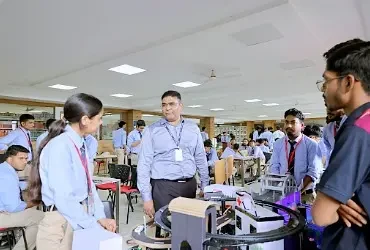
  1. Science Exhibitions: Students present innovative projects that demonstrate their understanding of scientific principles and their application to solving real-world problems. These exhibitions encourage teamwork, creativity, and effective communication.
  2. Quiz Competitions:
    • UNDP Quiz: Focused on sustainable development goals and global challenges, encouraging students to think critically about pressing issues.
    • IKS Quiz: This quiz celebrates India's knowledge systems and promotes an understanding of the country's rich scientific heritage.
    • Quantum Graduate Aptitude Test (Q-GAT): A preparatory platform for national-level exams, providing students with exposure to competitive assessment formats.
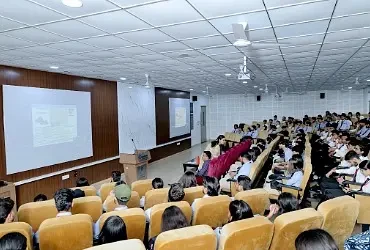
  3. Guest Lectures and Workshops: Regular Guest Lectures and workshops on topics like Quantum Computing, nanotechnology, renewable energy, and Water quality monitoring sessions keep students updated with the latest advancements in science and technology.

Field Trips & Industrial Visits

Field Trips & Industrial Visits

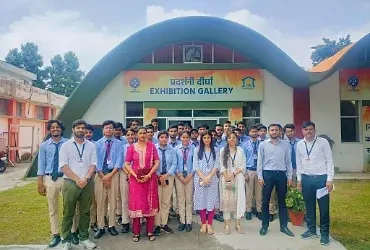
Field trips and industrial visits provide students with direct exposure to professional environments, enriching their academic learning with practical insights. The Department of Sciences organizes visits to renowned institutes and industries, enabling students to understand the application of scientific theories in real-world settings.

Wadia Institute of Himalayan Geology, Dehradun: Students explore geological phenomena and learn about ongoing research in seismology, paleontology, and Himalayan tectonics.

FTIR, Dehradun: This visit introduces students to advanced spectroscopic techniques used for molecular characterization.

National Institute of Hydrology (NIH), Roorkee: Focused on water resource management, these visits provide insights into hydrological research and innovations.

Central Building Research Institute (CBRI), IIT Roorkee: Students gain exposure to cutting-edge research in sustainable construction materials and disaster-resistant infrastructure.

CSIR Labs, IIT Roorkee: Engagement with pioneering research in various scientific domains fosters an appreciation for interdisciplinary approaches.

ONGC Oil Museum, Dehradun: An exploration of India's energy sector, this visit highlights the processes involved in oil exploration and production.

Interdisciplinary Research Projects and Dissertations

Interdisciplinary Research Projects and Dissertations

The Department of Sciences emphasizes research as a key component of experiential learning. Final-year students undertake interdisciplinary projects that encourage critical thinking and innovation.

Examples of Research Projects:

  • Development of eco-friendly materials for water purification.
  • Studies on the impact of climate change on local biodiversity.
  • Applications of nanotechnology in medicine and agriculture.
  • Renewable energy solutions for rural electrification.

Dissertation Process: Guided by experienced faculty, students identify research problems, design experiments, analyze data, and present findings, culminating in a comprehensive dissertation that reflects their academic rigor.

Collaborating with NGOs for Community Service Engagement

Community engagement is an essential aspect of holistic education. The Department collaborates with various NGOs to involve students in meaningful service-learning projects.

Activities Include:

  • Conducting science workshops for underprivileged school children.
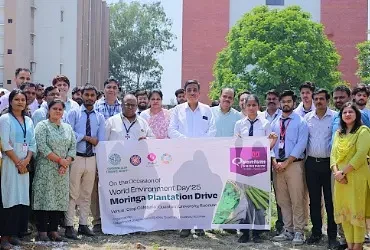
  • Participating in environmental conservation initiatives such as tree plantation drives and river clean-up campaigns.
  • Developing low-cost scientific tools and teaching aids for rural schools.

These initiatives not only enhance students' understanding of societal challenges but also instil a sense of responsibility and empathy.

Laboratory Trainings

Laboratory Trainings

Hands-on laboratory training is fundamental to the undergraduate science curriculum. The Department provides state-of-the-art facilities for experimentation and learning.

Physics Lab: Students explore concepts such as optics, electromagnetism, and quantum mechanics through experiments that enhance their analytical skills and technical competence.

Chemistry Lab: Focus areas include organic synthesis, analytical techniques, and environmental chemistry, equipping students with practical skills relevant to industry and research.

Virtual Labs: Through virtual lab platforms, students simulate complex experiments, gaining a deeper understanding of theoretical concepts while minimizing resource constraints.

Outstanding Career Outcomes

Our graduates are in high demand across top engineering companies and innovative startups


  • LPAHIGHEST PACKAGE OFFERED
  •  NUMBER OF COMPANIES VISITED
  •  NUMBER OF STUDENTS PLACED
  • LPAAVERAGE PACKAGE OFFERED

Career Tracks

Lab Analyst

Testing and validation in scientific labs.

Research Assistant

Experimental design and support.

Quality Controller

Product and chemical quality testing.

Teaching Assistant

Support in academic instruction.

Career Tracks
2
Career Tracks
Career Tracks
Career Tracks
Career Tracks
Career Tracks
Career Tracks
Career Tracks
bhm
bhm2
health

Entrepreneurship

Comprehensive Skill Development: At Quantum University, the teaching methodology includes extensive Skill Development Courses (SKCs) designed to equip students with the necessary skills to start their own ventures.

Entrepreneurial and Leadership Opportunities: Quantum University is providing ample opportunities to students to start their own ventures. More than 100 Start-ups are in progress.

Networking and Career Success: Quantum University fosters strong industry connections and real-world exposure, enabling students to build professional networks and unlock rewarding career opportunities.

Entrepreneurship
Entrepreneurship
Entrepreneurship
Entrepreneurship
Entrepreneurship
Entrepreneurship
Entrepreneurship
Entrepreneurship
Entrepreneurship
Entrepreneurship
Entrepreneurship
Entrepreneurship

Higher Studies

Master’s Programs: Quantum University offers a range of industry-relevant master's programs designed to deepen academic knowledge, enhance professional skills, and prepare students for leadership roles in their chosen fields.

Ph.D. Opportunities: Quantum University offers rigorous Ph.D. programs that foster advanced research, innovation, and academic excellence. With expert mentorship, interdisciplinary collaboration, and access to cutting-edge resources, scholars are empowered to contribute meaningful insights to their fields.

Networking and Career Success: Students benefit from a strong ecosystem of industry partnerships, alumni networks, and career development support. Regular workshops, internships, expert talks, and placement drives help students build valuable connections and achieve long-term career success.

Higher Studies
Higher Studies

Higher Studies

Higher Studies

Higher Studies

Higher Studies

Higher Studies

Higher Studies

Higher Studies

Higher Studies

health
rr

Mentors Who Shape Futures

rupali mishra
Dr. Rupali Mishra
Assistant Professor
Profile
gunjan agarwal
Dr. Gunjan Agarwal
Assistant Professor
Profile
ajay kumar sharma
Dr. Ajay Kumar Sharma
Assistant Professor
Profile
nishant khandelwal
Dr. Nishant Khandelwal
Assistant Professor
Profile
surendra singh
Dr. Surendra Singh
Assistant Professor
Profile
ak seth
Dr. Ashok Kumar Seth
Assistant Professor
Profile
dr  shaily chaudhray
Dr. Shaily Choudhary
Assistant Professor
Profile
abhishek agarwal
Abhishek Agarwal
Assistant Professor
Profile
manisha dhami
Manisha Dhami
Assistant Professor
Profile
vipin kumar
Vipin Kumar
Assistant Professor
Profile

Research Highlights

Quantum University fully supports and encourages interdisciplinary research initiatives across different areas of study.

  • +Paper Publications
  • +Patents
  • +Startup Grants

Industry -Academic Collaborations

Quantum University has partnerships with over 150 industry leaders, providing students with valuable practical experience and exposure to current industry trends. Companies offer internships, real-world projects, and job opportunities to over 900 students annually at the best packages.



comp 04
comp 05
comp 06
comp 07
comp 08
comp 10
comp 11
comp 12


Learning Experience

curriculum

CURRICULUM

interdisciplinary

INTERDISCIPLINARY

passion programs 2

PASSION PROGRAMS (PROPS)