


 Undergraduate
 Postgraduate
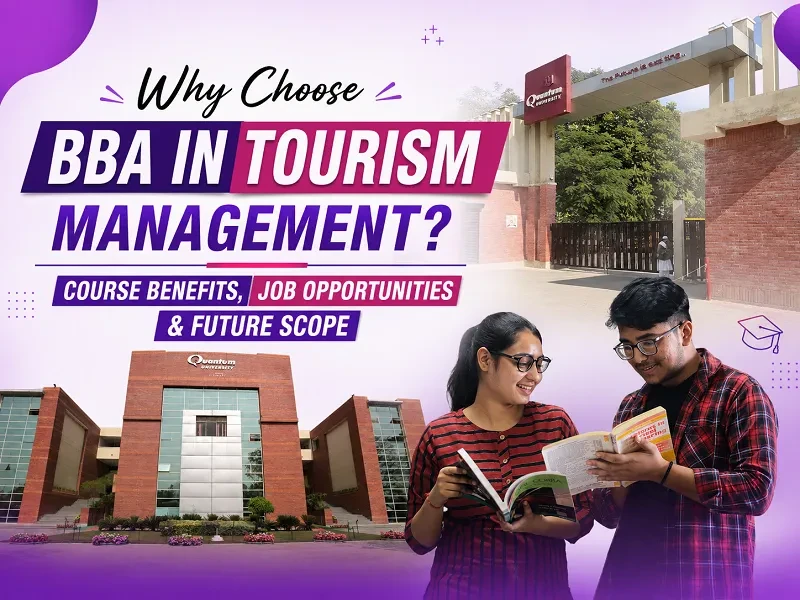
Behind every successful holiday, corporate conference, or international tour is an unseen team managing bookings, logistics, marketing, and customer experience. It takes much more than basic hotel reservations to keep the global travel industry moving. Modern tourism depends on dynamic pricing models, destination branding, and complex transit networks. If you want to build a career in this sector, a specialized business degree gives you a distinct advantage. Choosing a BBA in Tourism Management equips you with the business, operational, and customer management skills needed to manage large-scale travel agencies, resort networks, and corporate event systems.
What is BBA in Tourism Management?
A Bachelor of Business Administration (BBA) in Tourism Management is a three-year undergraduate program combining core business principles with specialized training in global travel operations. Unlike traditional management degrees, this program focuses directly on service-sector logistics. You study how destinations develop, how airlines manage revenue, and how tour operators design complex itineraries.
Curriculum Structure
Core Areas Covered in the Curriculum
- Travel Agency & Tour Operations: Itinerary planning, GDS software (Amadeus/Galileo), and ticketing workflows.
- Destination Marketing & Planning: Promotion strategies and management of historic sites in regional marketing.
- MICE Management: Meetings, incentives, conventions, and exhibitions management.
- Tourism Economics & Forex: Foreign exchange, yield management, and pricing.
- Sustainable & Eco-Tourism: Conservation vs business profitability.
Key Benefits of Pursuing a BBA in Tourism Management
1. High Growth and Economic Demand
The travel and tourism industry continues to create employment across airlines, hotels, travel agencies, event companies, and destination management firms. As tourism infrastructure expands and more people travel for work and leisure, organizations are looking for graduates who understand both business and travel operations.
2. Industry-Specific Skill Acquisition
A general degree leaves you learning basic industry tools on the job. A specialized tourism degree trains you on global reservation platforms, CRM software, and foreign exchange protocols directly in the classroom.
3. Diverse Career Trajectories
You are not locked into a single job role. The training applies equally well to commercial airlines, luxury cruise lines, corporate travel management firms, and national tourism boards.
4. Cross-Over into Healthcare and Medical Travel
Medical value travel is growing rapidly across Asia. International patients travel frequently for specialized care, requiring structured coordination between hospitals, hotels, and transport services. A background in travel operations combined with knowledge from a BBA in Hospital and Healthcare Management positions you well to run medical tourism divisions for regional hospital networks.
Course Eligibility and Admission Process
Getting into a top-tier program requires meeting clear academic benchmarks.
| Criteria | Standard Requirement |
|---|---|
| Academic Qualification | 10+2 (Higher Secondary) from a recognized board in any stream. |
| Minimum Aggregate Marks | Usually 45% to 50% at the 12th-grade level. |
| Age Limit | Minimum 17 years at the time of admission. |
| Selection Process | Merit-based on 12th marks or performance in university entrance tests. |
Comparative Analysis: General BBA vs. BBA in Tourism Management
How does a broad business degree stack up against a specialized travel management track?
| Feature | General BBA | BBA in Tourism Management |
|---|---|---|
| Primary Focus | Broad exposure to accounting, marketing, and HR. | Core business principles integrated with travel operations. |
| Practical Training | Corporate summer internships in generic business roles. | Field trips, destination studies, GDS software training, and hospitality exposure. |
| Target Job Roles | Business Analyst, HR Executive, Marketing Executive. | Tour Manager, Destination Planner, Travel Consultant, MICE Specialist. |
| Industry Readiness | Requires post-hire training for specialized service sectors. | Immediate operational utility in travel, aviation, and hospitality firms. |
Career Opportunities and Job Roles
Not every tourism graduate ends up working behind a travel agency desk. The scope spans multiple sectors within the broader service economy.
1. Tour Operations and Travel Agencies
- Travel Consultant / Itinerary Planner: Design customized travel packages for leisure and corporate clients while managing flight connections, hotel inventory, and local transport.
- Tour Manager: Escort group tours, ensuring smooth execution of logistics, accommodation, and sightseeing protocols.
2. Corporate MICE & Event Planning
- Event Coordinator: Organize trade shows, corporate retreats, and international conventions that require precise scheduling and vendor management.
3. Aviation and Cruise Operations
- Ground Operations Executive: Manage passenger traffic, ticketing counters, and customer support desks for commercial airlines.
- Cruise Operations Specialist: Oversee passenger services, shore excursions, and administrative workflows on international cruise ships.
4. Medical Tourism Coordination
- Healthcare facilities actively recruit professionals who understand cross-border travel logistics to manage international patient departments, arranging medical visas, stays, and recovery travel.
Realistic Salary Expectations in India
What kind of pay package can you expect after graduation? Compensation grows steadily as you move from execution-level jobs to strategic operational roles.
- Entry-Level Roles (0–2 Years): ₹3 Lakh to ₹4.5 Lakh LPA (Travel Executive, Ground Staff, Junior Event Coordinator).
- Mid-Level Roles (3–6 Years): ₹5.5 Lakh to ₹8.5 Lakh LPA (Assistant Tour Manager, Regional Logistics Lead, Destination Marketer).
- Senior Roles (7+ Years): ₹10 Lakh to ₹18+ Lakh LPA (Operations Director, General Manager, Head of Corporate MICE).
How to Choose the Right College
Selecting where to study can influence your internship access just as much as your classroom learning. Studying near active tourism belts or industrial corridors provides immediate advantages for site visits and practical projects. If you are looking for colleges for a BBA in travel and tourism in Roorkee or evaluating BBA in tourism and hospitality management colleges in Uttarakhand, keep a few key factors in mind:
- Software Infrastructure: Ensure the computer labs run active GDS platforms like Amadeus or Galileo.
- Regional Connectivity: Colleges located near established tourism hubs (like the Dehradun-Haridwar-Rishikesh corridor) offer easier access to field trips and hotel partnerships.
- Faculty Background: Look for instructors who have managed tour operations, aviation desks, or resort properties directly.
Future Scope and Industry Trends
Where is the travel market heading next? The industry is undergoing rapid shifts driven by digital tools and changing consumer priorities.
1. Sustainable and Regenerative Tourism
Travelers increasingly favor eco-friendly lodging, lower carbon footprints, and community-based travel. Managers must know how to build itineraries that protect local ecosystems while remaining commercially viable.
2. Tech-Driven Travel Platforms
Artificial intelligence, predictive analytics, and automated booking systems are standard across modern agencies. Future leaders must analyze data to forecast booking patterns and adjust dynamic pricing instantly.
3. Niche Tourism Specializations
Wellness travel, adventure sports, and medical value travel are taking center stage. Professionals who know how to coordinate these specialized segments will see strong demand across Asia and the Middle East.
Common Mistakes Students Make (And How to Avoid Them)
- Ignoring Technical Software Tools: Practice on reservation and booking software early to stand out to recruiters immediately.
- Overlooking Cross-Sector Opportunities: Explore corporate travel desks, cruise operations, and healthcare travel coordination alongside standard travel agencies.
- Delaying Practical Internships: Seek out field projects, event volunteering, and summer internships starting in your first year rather than waiting until graduation.
Step-by-Step Action Plan for Prospective Students
Ready to take the next step? Follow this roadmap to guide your admission and career preparation:
- 1. Verify Your Basic Eligibility: Confirm that your 12th-grade aggregate meets university thresholds (usually 45%–50%).
- 2. Evaluate Colleges Carefully: Choose institutions with practical labs, guest lectures from industry professionals, and established corporate placement links.
- 3. Build Core Technical Skills: Get comfortable with travel reservation software, financial planning basics, and professional communication.
- 4. Choose Your Specialization Early: Identify whether your interests lean toward corporate event management, luxury hotel operations, airline logistics, or health-sector travel coordination.
Frequently Asked Questions
What is BBA in Tourism Management, and what does the course cover?
It is a 3-year undergraduate management degree. The curriculum covers core business administration alongside travel agency operations, destination marketing, MICE management, ticketing systems, and sustainable tourism practices.
Is BBA in Tourism Management a good career choice in India?
Yes. Expanding airport infrastructure, growing disposable income, and government initiatives make travel and hospitality strong economic drivers. The degree offers diverse entry points across airlines, travel agencies, resorts, and corporate travel firms.
What are the career opportunities after completing a BBA in Tourism Management?
Graduates work as Travel Consultants, Tour Managers, Event Coordinators, Ground Operations Executives, Destination Marketers, and Medical Tourism Coordinators.
What is the eligibility criteria for admission to a BBA in Tourism Management program?
You need to complete your 10+2 (Higher Secondary) from a recognized board in any stream with a minimum aggregate score of 45% to 50%.
What is the average salary after a BBA in Tourism Management?
Starting salaries for freshers range from ₹3 Lakh to ₹4.5 Lakh LPA. Mid-level managers earn between ₹5.5 Lakh and ₹8.5 Lakh LPA, while senior operations heads earn past ₹10 Lakh LPA.
Final Takeaway
Choosing a BBA in Tourism Management at Quantum University opens a clear pathway into one of the world's most dynamic service industries. The program combines academic learning with practical exposure to global travel operations, event logistics, destination management, and hospitality practices. Students develop industry-relevant skills and gain the operational foundation needed for long-term career growth in the tourism and travel sector.
