


 Undergraduate
 Postgraduate


Finding the best universities in India can feel surprisingly confusing once you move past the familiar names. A university may be excellent for research but offer a very different experience from one known for engineering, management, medicine, media, or interdisciplinary courses. Then there are the questions students actually have to answer: What will I study? How much freedom will I have to choose subjects? What will the course cost? Are the facilities worth the fees? And what kind of opportunities will I have outside the classroom?
If you are comparing top universities in India, ignore the campus size for a minute. The real differences sit inside specific degree structures, admission criteria, fee breakdowns, and specialized departments. A national ranking can be a useful starting point, but it cannot tell you whether a particular course fits what you want to do after Class 12 or graduation.
This list brings together 10 universities with very different strengths, from research-led institutions such as IISc and JNU to universities offering broader professional and interdisciplinary options. The aim is to give you enough context to compare them on the things that will actually affect your university experience.
1. Quantum University, Roorkee
As the best private university in India, built on interdisciplinary learning, Quantum University uses a credit framework that allows students to pair a primary major with a minor from an entirely different field.
Undergraduate students complete an additional 24 credits starting in their third semester to earn a formal Minor certificate alongside their degree. For example, a student pursuing a B.Tech in Computer Science can opt for a minor in Data Analytics, Robotics & Automation, or Entrepreneurship. Students in business or mass communication programmes can choose minors in Web Designing, Media Management, or Financial Literacy.
Select technology tracks incorporate industry-linked training modules developed with corporate partners like Quick Heal and Samatrix. Departmental facilities in Roorkee include engineering labs, media production suites, an incubation center for student startups, and agricultural experimental plots.
- Location: Roorkee, Uttarakhand
- Type: Private University
- Selected programmes: B.Tech Computer Science, BBA, MBA, B.Sc. (Hons.) Agriculture, BCA, BA JMC
- Location: Roorkee, Uttarakhand


2. Indian Institute of Science (IISc), Bengaluru
IISc Bengaluru indeed holds a high rank among the best universities in India as it centers its academic model on direct laboratory innovation Best known for its postgraduate and doctoral output, the institute admits undergraduates to specialized tracks like the Bachelor of Science (Research) and B.Tech in Mathematics and Computing.
Undergraduates work directly within active research laboratories alongside faculty and doctoral scholars. The 440-acre campus houses advanced technical facilities, including hypersonic wind tunnels, microelectronics cleanrooms, biological safety labs, and supercomputing infrastructure.
Admission routes vary strictly by programme, utilizing competitive national scores from exams like JEE Advanced, NEET-UG, or the IISER Aptitude Test.
- Location: Bengaluru, Karnataka
- Type: Public Deemed-to-be University (Institution of National Importance)
- Selected programmes: B.Sc. (Research), B.Tech in Mathematics and Computing, M.Tech, Integrated Ph.D.
3. Jawaharlal Nehru University (JNU), New Delhi
Social sciences, international relations, foreign languages, and environmental studies form the core of JNU’s academic identity.
The School of International Studies and the School of Social Sciences drive a significant portion of the university’s postgraduate research output. Through the School of Language, Literature & Culture Studies, JNU offers undergraduate and master’s degrees in several foreign languages, including Japanese, Chinese, French, German, Korean, and Arabic.
The university is a central public institution with residential facilities, research resources and subsidised tuition. CUET is used for admission to many of its undergraduate and postgraduate programmes.
Admission routes vary strictly by programme, utilizing competitive national scores from exams like JEE Advanced, NEET-UG, or the IISER Aptitude Test.
- Location: New Delhi
- Type: Central Public University
- Selected programmes: BA (Hons.) in Foreign Languages, MA in Political Science, MA in International Relations, M.Sc. in Environmental Sciences


4. Banaras Hindu University (BHU), Varanasi
Founded in 1916, BHU integrates humanities, natural sciences, medicine, agriculture, law, fine arts, and engineering across a unified campus in Varanasi.
The residential campus features academic departments, student housing, specialized institutes, and the Bharat Kala Bhavan museum. The Institute of Medical Sciences runs Sir Sunderlal Hospital as a regional teaching healthcare facility, while the Institute of Agricultural Sciences operates dedicated experimental research farms.
Because of its scale, academic departments and student residential complexes operate as integrated campus units.
- Location: Varanasi, Uttar Pradesh
- Type: Central Public University
- Selected programmes: B.Sc. (Hons.) Agriculture, MBBS, BA (Hons.), LLB, M.Sc. Physics, B.FA
5. University of Hyderabad (UoH), Hyderabad
The University of Hyderabad (UoH) deserves a fair mention among the Top Universities in India. The institute offers postgraduate, doctoral and integrated programmes across science, humanities, social sciences and computer applications. Its five-year Integrated M.Sc. and M.A. programmes admit students after Class 12 and combine undergraduate and postgraduate study within one programme.
The university’s Hyderabad location also places its campus near research institutions such as CSIR-CCMB, IICT and TIFR Hyderabad. This gives students access to a wider research environment, including seminars and opportunities for academic interaction with researchers from these institutions.
- Location: Hyderabad, Telangana
- Type: Central Public University
- Selected programmes: 5-Year Integrated M.Sc. (Physics/Chemistry/Life Sciences), Integrated M.A. in Economics, MCA


6. Aligarh Muslim University (AMU), Aligarh
AMU’s academic programmes span humanities, basic sciences, engineering, medicine, law, and business administration. Established as a college in 1875 and chartered as a central university in 1920, it operates from its primary campus in Aligarh.
Key academic divisions include the Zakir Husain College of Engineering and Technology, the Jawaharlal Nehru Medical College, and the Maulana Azad Library.
Student life at AMU is organized around its residential halls, which host internal academic, sports, and cultural activities.
- Location: Aligarh, Uttar Pradesh
- Type: Central Public University
- Selected programmes: B.Tech, MBBS, BA LLB, B.Sc. (Hons.), MBA, MA in History
7. Jamia Millia Islamia (JMI), New Delhi
Another renowned institution in India, Jamia Millia Islamia, has a wide range of programs related to the Humanities, Professional and Technical Courses. The AJK Mass Communication Research Centre (AJK-MCRC) program of this university will be especially beneficial for those who aspire to be journalists or filmmakers as it provides television production, editing, and sound studios.
There are also other faculties which include Engineering, Law, Architecture, Fine Arts, and Social Work. Admission criteria differ from program to program and involve CUET test scores and university-level admission tests.
- Location: New Delhi
- Type: Central Public University
- Selected programmes: BA in Mass Media, B.Tech, BA LLB (Hons.), B.Arch, Master of Social Work (MSW)


8. Manipal Academy of Higher Education (MAHE), Manipal
MAHE maintains major academic offerings in health sciences, engineering, management, and media from its primary campus in Manipal, Karnataka.
Manipal’s academic and residential facilities are concentrated across the university area, bringing Kasturba Medical College (KMC), the Manipal Institute of Technology (MIT), clinical simulation centers, research laboratories, and student housing into one central environment.
The university conducts its own entrance examination (MET) for engineering and health science admissions, while utilizing national tests like NEET for medical degree tracks.
- Location: Manipal, Karnataka
- Type: Private Deemed-to-be University
- Selected programmes: B.Tech (Computer Science/Data Science), MBBS, B.Pharm, BBA, BA in Media and Communication
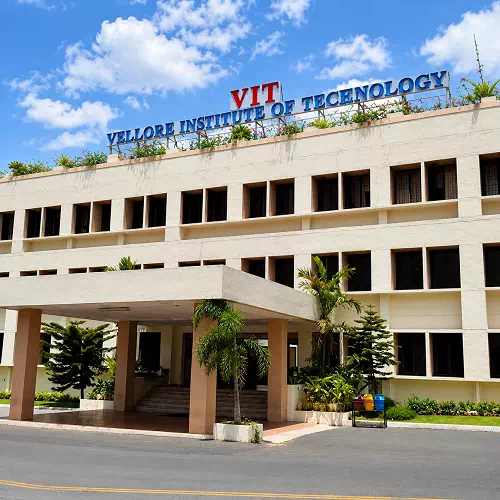
9. Vellore Institute of Technology (VIT), Vellore
Vellore Institute of Technology is a private deemed-to-be university in Tamil Nadu offering degree tracks in engineering, computer applications, and applied sciences.
VIT operates under a credit framework called the Fully Flexible Credit System (FFCS). Depending on timetable availability and departmental rules, this system allows students to adjust course loads, select electives across departments, and register for preferred class schedules.
Career guidance and corporate recruitment drives are coordinated centrally, with hiring visits conducted on campus each academic year.
- Location: Vellore, Tamil Nadu
- Type: Private Deemed-to-be University
- Selected programmes: B.Tech Computer Science and Engineering, B.Tech Mechanical, BCA, MCA, Integrated M.Sc.

10. Amity University, Noida
Amity University Noida offers traditional degree choices alongside specialized tracks tailored to emerging technical and corporate fields.
Students can apply for degrees in areas like Cyber Law, Forensic Science, Biotechnology, Data Analytics, and Corporate Communication. Facilities on the Noida campus include departmental labs, media production studios, athletic facilities, and career placement centers.
Admissions are evaluated based on qualifying board marks, internal selection procedures, or national entrance test performance, depending on the programme.
- Location: Noida, Uttar Pradesh
- Type: Private University
- Selected programmes: B.Tech, BBA, Integrated Law (BA LLB / BBA LLB), B.Sc. Forensic Science, B.Tech Biotechnology
Best Universities in India Comparison
| University | Management Type | Primary Academic Focus | Location | Admission Route |
| Quantum University | Private | Interdisciplinary Studies, Engineering, Management | Roorkee, Uttarakhand | Merit / Q-CARE |
| IISc Bengaluru | Public Deemed | Pure Science, Advanced Engineering, Research | Bengaluru, Karnataka | JEE Advanced / NEET-UG / IAT |
| JNU New Delhi | Central Public | Social Sciences, International Studies, Languages | New Delhi | CUET-UG / CUET-PG |
| BHU Varanasi | Central Public | Arts, Science, Agriculture, Medicine, Law | Varanasi, Uttar Pradesh | CUET-UG / CUET-PG / NEET-UG |
| Univ. of Hyderabad | Central Public | Integrated Sciences, Humanities, Social Sciences | Hyderabad, Telangana | CUET-UG / CUET-PG |
| AMU Aligarh | Central Public | Engineering, Medicine, Law, Arts | Aligarh, Uttar Pradesh | AMU Entrance Exam / CUET |
| Jamia Millia Islamia | Central Public | Mass Communication, Law, Engineering, Architecture | New Delhi | JMI Entrance Exam / CUET |
| MAHE Manipal | Private Deemed | Health Sciences, Engineering, Management | Manipal, Karnataka | MET / NEET-UG |
| VIT Vellore | Private Deemed | Engineering, Computer Applications, Applied Sciences | Vellore, Tamil Nadu | VITEEE |
| Amity University | Private | Applied Sciences, Cyber Law, Management, IT | Noida, Uttar Pradesh | Entrance Exam / Meri |
What to Compare Before Applying for a Top University in India
Start with the department you would actually join. Its syllabus, faculty, facilities, fee structure, and elective options will affect your experience much more directly than the university name alone.
1. Curriculum Structure and Flexibility
The subjects students can choose beyond their core programme depend on the degree they pursue. At Quantum University, students can add a minor from another academic area alongside their main degree. The available minor combinations vary by programme, so checking the course structure can help students understand the choices available to them.
2. Departmental Infrastructure
A large library or attractive campus grounds do not show whether the software, laboratories, media suites, or clinical facilities used by your specific course are adequate. If possible, check the laboratories, studios, computing facilities, or clinical infrastructure used by the department you are applying to.
3. Recognition and Professional Approvals
Confirm the university's legal status and recognition through the official UGC website. For professional programmes such as Law, Engineering, Pharmacy, or Nursing, verify that the course holds approval from relevant statutory bodies like the BCI, AICTE, PCI, or INC.
Understanding NIRF Rankings
NIRF uses five areas to assess universities. Each area has a set percentage in the final score.
| NIRF Category | Weightage | Parameters |
| Teaching, Learning & Resources (TLR) | 30% | Student strength, faculty-to-student ratio, doctoral faculty and financial expenditure |
| Research & Professional Practice (RP) | 30% | Publications, citations, patents and external research grants |
| Graduation Outcomes (GO) | 20% | Examination results, Ph.D. completions and median placement salaries |
| Outreach & Inclusivity (OI) | 10% | Regional diversity, female student ratio and facilities for students with disabilities |
| Peer Perception (PR) | 10% | Feedback from academic peers and employers |
NIRF scores do not tell you everything about undergraduate teaching, course flexibility, or the facilities available in a particular department. A university's overall position can look quite different from the experience offered by one specific programme. For engineering, management, or other professional tracks, checking department-specific NIRF categories provides more relevant context than the overall university rank.
Admissions, Fees, and Scholarships
CUET is used by many central universities and participating institutions, but it is not the universal admission route for every programme. Professional courses frequently rely on national examinations like JEE Advanced, NEET-UG, or GATE. Many private and deemed-to-be universities use their own entrance tests, national scores, board results, or a combination of these. Quantum University, MAHE, and VIT, for example, runa Q-CARE , MET, and VITEEE respectively for specified intake.
Base tuition is only one part of the total cost. When calculating a budget for higher education, evaluate all associated expenses:
| Expense Component | What to Verify |
| Base Tuition Fees | Varies significantly between subsidized public universities and private institutions. |
| Hostel and Mess Fees | Depends on room selection (air-conditioned vs. standard, single vs. shared) and meal plans. |
| Institutional Deposits | One-time laboratory deposits, library security, examination fees, and registration charges. |
| Study Materials | Costs for required textbooks, personal laptops, software licenses, or practical equipment. |
Financial assistance depends on the institution type. Eligible candidates can apply for Central and State Post-Matric Scholarships. Many private universities also offer merit-based financial aid; Quantum University, for instance, offers fee concessions based on 10+2 board scores or performance in its Q-CARE entrance test. Students can also explore education-loan options through participating banks and the Vidya Lakshmi portal, subject to the lender's eligibility rules.
Application Checklist
- Confirm the university's legal status and recognition through the official UGC website.
- For professional programmes, verify approval from relevant statutory bodies (AICTE, BCI, PCI, INC).
- Review the course syllabus for the current academic year to evaluate updated modules and tools.
- Calculate total expenses by adding tuition, hostel, mess, and examination feess
- Review scholarship eligibility criteria and annual renewal conditions.
- Check the specific laboratory, software, or studio infrastructure assigned to your department.
Frequently Asked Questions (FAQs)
What should I look for when choosing a private university in India?
Look at the department first. A private university may have a strong overall reputation, but a particular programme can differ in faculty strength, facilities, fees, and placement outcomes. Check UGC recognition and any professional approval required for the course, then review the syllabus, fee structure, facilities, and programme-level placement information.
How does a major-minor credit structure work?
A major represents your primary field of study and accounts for most of your degree credits. A minor is a secondary concentration in another subject area. The credit requirement depends on the institution. At Quantum University, pursuing a minor involves taking an additional 24 credits starting from the third semester, yielding a Minor certificate alongside the primary degree.
What is the difference between a Central University and a Private University?
A Central University is established by an Act of Parliament, while a private university is established under relevant State legislation. Their funding models and fee structures also differ. Admission rules are set by the individual university and programme, so CUET applies to some institutions and courses but not to all of them..
Is CUET mandatory for all university admissions in India?
No. CUET is used by central public universities and selected participating state and private institutions. Many private and deemed-to-be universities use their own admission tests, national entrance-exam scores, board results, or a combination of these, depending on the programme.
Are degrees from private universities valid for government competitive exams?
A degree from a recognized private university or deemed-to-be university can be accepted for government examinations and further study, but eligibility is determined by the rules of the particular examination or institution. Check the current notification before applying, especially where a specific degree, subject, or professional approval is required.
Final Takeaway
A shortlist is more useful when the details behind each university are clear. For students searching for the best university in India, the syllabus, admission route, total fees, department laboratories and graduate outcomes are worth checking before settling on a choice.
Quantum University offers major-minor options, giving students the opportunity to study an additional field alongside their main programme. Students interested in this option can look at the current major-minor combinations, admission requirements and fee structure to see how they fit with their academic plans.
