


 Undergraduate
 Postgraduate

What makes one management programme cost a few lakh rupees while another can require an investment of ₹25 lakh or more? The answer is rarely the campus alone. Programme structure, admission standards, faculty, industry exposure, location, alumni networks and placement opportunities all influence what you get from an MBA. The qualification itself also matters. An MBA, PGDM and PGP may all lead towards management careers, but they are not identical credentials.
If you are searching for the Best MBA Universities in India, start by looking beyond a ranking position. Your academic record, entrance-exam score, budget, work experience and career plans should all influence the shortlist. This guide compares ten well-known management institutions and universities across these factors, while also explaining what to check before choosing an online, distance or full-time MBA.
What Should You Look for in the Best MBA Universities in India?
There is no single institution that fits every MBA applicant.
A fresh graduate looking for an affordable full-time programme may have very different priorities from a professional with five years of work experience. Similarly, someone targeting investment banking may value a different curriculum and recruiter mix from a student interested in human resources or business analytics.
Before applying, compare these areas:
- Recognition and qualification: Check who awards the degree or diploma and whether the programme has the relevant recognition or accreditation.
- Admission route: Look at CAT, XAT, CMAT, MAT, GMAT, university-level tests and profile-based selection, depending on the institution.
- Total cost: Tuition is only one part of the calculation. Add accommodation, food, deposits, study materials, travel and other compulsory charges.
- Curriculum: Look for relevant specialisations, electives, analytics exposure, projects, internships and opportunities to work on practical business problems.
- Career outcomes: Examine placement reports, median or average salaries, recruiter profiles and the types of roles offered.
- Student profile: Consider whether the programme is designed mainly for fresh graduates, experienced professionals or both.
This approach gives you a more useful comparison than simply asking which institution has the highest rank.
MBA vs PGDM vs PGP: What Is the Difference?
MBA, PGDM and PGP are all postgraduate management qualifications, but they differ in their awarding authority, structure and programme format. Understanding this distinction can help you compare institutions on an equal basis before you apply.
Master of Business Administration, or MBA
An MBA is a postgraduate degree awarded by an eligible university or degree-awarding institution. Public and private universities offer MBA programmes across a wide range of specialisations, including finance, marketing, human resources, business analytics and operations. Before applying, check the university's current recognition status, programme curriculum and admission requirements.
Post Graduate Diploma in Management, or PGDM
A PGDM is a postgraduate diploma offered by an autonomous management institution. Some eligible PGDM programmes are recognised as equivalent to an MBA for purposes such as higher education, subject to the applicable requirements. The qualification name alone should not determine your decision. Compare the institution's recognition, accreditation, curriculum, faculty, industry exposure and placement record as well.
Post Graduate Programme in Management, or PGP
PGP is a programme title used by institutions such as the Indian Institutes of Management and the Indian School of Business. The qualification awarded at the end depends on the institution. IIMs can award MBA degrees under the IIM Act, while ISB's flagship PGP is a one-year postgraduate management programme rather than a conventional university MBA. Knowing these differences makes it easier to compare programmes based on what you will actually study, the qualification you will receive and the career path you want to pursue.
10 MBA Universities and Management Institutes to Consider
MBA options in India range from private universities and autonomous business schools to the Indian Institutes of Management and management departments within leading public institutions. Their fees, admission processes, programme structures and qualifications can vary considerably.
Instead of treating all institutions as part of one ranking, the options below are grouped by institution type. This gives students a clearer way to compare programmes based on what they offer and who they are designed for.
Private Universities and Management Institutes
1. Quantum University, Roorkee
Quantum University offers a two-year full-time MBA through its School of Business. The programme covers core areas of management while giving students opportunities to explore specialisations and emerging areas such as analytics and technology.
The MBA is open to graduates from different academic backgrounds, subject to the university's eligibility requirements. Quantum's current admission information considers scores from management entrance examinations including CAT, CMAT, MAT and XAT, with the applicable criteria depending on the intake.
For students comparing private MBA universities, total cost is an important consideration. Quantum publishes its fee structure separately across applicable categories and components, so applicants should assess the complete cost of the two-year programme rather than relying on a single headline figure.
Who may want to consider it: Students looking for a private university MBA in North India who want a full-time programme with multiple management specialisations and a comparatively accessible fee structure.


2. S.P. Jain Institute of Management and Research, Mumbai
In SPJIMR, the candidates would be enrolled for a full-time, residential course PGDM of two years’ duration as compared to the regular MBA offered by other universities. This is an approved course by the AICTE and in addition has accreditation; therefore, the candidates should get acquainted with the credential system before applying.
While selecting candidates, this institute considers the overall profile of the candidates along with their performance in the CAT/GMAT examinations.
The published fee for Indian participants is currently ₹24.86 lakh for the PGDM, including tuition and basic hostel accommodation, although the institute notes that fees are subject to revision.
Who may want to consider it: Candidates looking for a residential PGDM with profile-based selection and opportunities across several business functions.
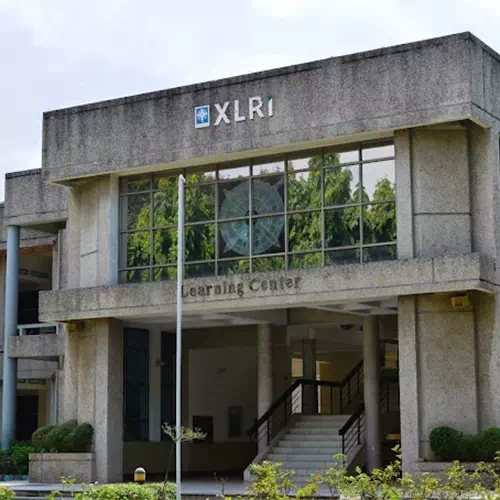
3. XLRI Xavier School of Management
XLRI is particularly well known for management education in human resources, although its academic offerings extend beyond HR.
Its two-year management programmes include PGDM programmes in Human Resource Management and Business Management. Admission routes and selection requirements vary by programme, with XAT playing an important role in the flagship courses.
For students interested in HR, organisational behaviour, industrial relations or broader business management, the programme structure, faculty and alumni network are useful factors to examine.
Who may want to consider it: Candidates interested in HR or business management who want to study at a specialised management institute.

4. Management Development Institute, Gurugram
MDI Gurugram offers several postgraduate management programmes, including its PGDM and PGDM-HRM programmes.
Its location in the National Capital Region puts students close to a major corporate and business-services hub. However, location should be considered alongside the programme curriculum, admission process, student profile and placement record rather than treated as a placement guarantee.
Because MDI offers several management programmes with different structures, applicants should check the fee and eligibility requirements for the specific programme they intend to join.
Who may want to consider it: Candidates comparing established management institutes in the NCR across general management, HR and related areas.
Most Prestigious Government Institutions
Indian Institutes of Management
The Indian Institutes of Management form a separate category within India's management education system. There are currently 21 IIMs across the country, with each institute operating independently and offering its own programmes, admission criteria and fee structure.
The flagship two-year MBA programmes at the IIMs generally admit candidates through CAT, followed by institute-specific selection processes. However, the IIMs are not identical. Their programme offerings, academic strengths, location, fees and selection criteria vary from one institute to another.
Among the IIMs, the following are particularly well known for their flagship management programmes:
1. IIM Ahmedabad
IIM Ahmedabad is one of India's most established management institutions and is widely recognised for its case-based approach to management education.
Its flagship two-year MBA programme combines classroom learning, case discussions, projects and interaction with students from varied academic and professional backgrounds.
Admission is highly competitive, with CAT performance forming an important part of the selection process, followed by the institute's subsequent selection stages.
Who may want to consider it: Candidates seeking a rigorous two-year management programme and prepared for a highly competitive admission process.


2. IIM Bangalore
IIM Bangalore's flagship two-year PGP is a full-time residential programme leading to an MBA degree. The institute also offers a separate PGP in Business Analytics.
The programme attracts candidates from engineering, commerce, economics, science and other academic backgrounds. CAT is the relevant entrance examination for the domestic PGP, while the selection process considers several factors beyond the test score.
Bengaluru's technology and start-up ecosystem can also be relevant to students interested in technology, entrepreneurship, analytics and consulting.
Who may want to consider it: Applicants interested in management careers connected with technology, analytics, entrepreneurship or consulting.
3. IIM Calcutta
IIM Calcutta offers a two-year MBA and has a strong academic focus on areas including finance, economics, analytics and quantitative management.
The programme is designed for graduates seeking broad management education in a rigorous academic environment. Applicants should also distinguish between the MBA and other programmes offered by the institute, including its postgraduate programme in business analytics.
Who may want to consider it: Students interested in finance, consulting, analytics and other careers where quantitative business skills are particularly relevant.

Other Leading Public and Autonomous Institutions

1. Faculty of Management Studies, University of Delhi
The Faculty of Management Studies, University of Delhi, offers a full-time MBA within the University of Delhi system.
Its comparatively low tuition fee is one factor that attracts substantial interest from CAT applicants. Admission, however, is highly competitive, so the fee should be considered alongside the programme's selection process and applicant pool.
Students also benefit from being part of a large university ecosystem in Delhi, which can be relevant for those interested in consulting, finance, marketing and other corporate functions.
Who may want to consider it: Applicants who want to pursue a highly selective full-time MBA while keeping tuition costs comparatively low.
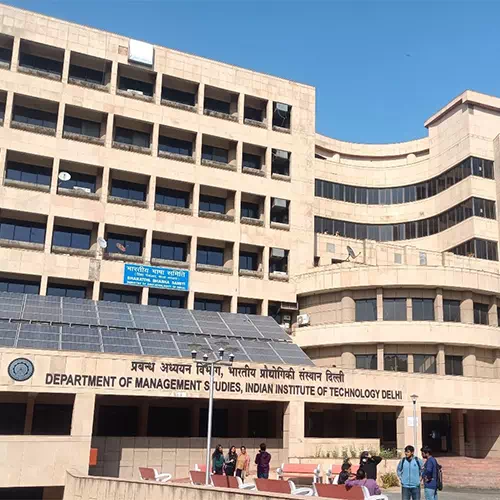
2. Department of Management Studies, IIT Delhi
The Department of Management Studies at IIT Delhi offers an MBA within the wider academic environment of the Indian Institute of Technology Delhi.
This provides an option for students who want management education alongside a technology-focused academic ecosystem. The programme can be relevant to applicants interested in consulting, analytics, operations and technology-oriented business roles.
Admission to the flagship MBA is linked to CAT performance, followed by the institute's own selection process and criteria.
Who may want to consider it: Candidates interested in the intersection of management, technology, analytics and operations.

3. Indian School of Business
ISB is structurally different from most of the two-year programmes discussed above.
Its flagship Post Graduate Programme in Management is a one-year, full-time residential programme designed for candidates with professional experience. Current eligibility requires at least 24 months of work experience and a valid test-centre GMAT or GRE score.
This format can appeal to professionals who want an intensive management education without spending two years away from the workplace.
Who may want to consider it: Working professionals seeking a one-year management programme for career transition, broader management responsibilities or progression towards leadership roles.
How to Compare These MBA Options
The institution's name is only one part of the decision. Before applying, compare the programme duration, qualification awarded, admission route, total fees, curriculum, specialisations, work-experience requirements and recent placement reports for the exact programme you are considering.
This is especially important when comparing a university MBA with a PGDM, an IIM programme or a one-year management programme. Your academic background, career stage, budget and intended career path should all form part of the comparison.
How Much Does an MBA Cost in India?
MBA fees vary dramatically. A public university programme can cost only a few lakh rupees in tuition, while premium management institutes can require an investment of ₹20 lakh or more. Online and distance programmes can follow a very different fee model.
The number that matters is therefore not simply the advertised tuition.
Before comparing two programmes, calculate:
| Cost component | What to check |
| Tuition | Total programme fee rather than one semester |
| Accommodation | Hostel, residence and security deposits |
| Food | Mess or meal charges |
| Study costs | Books, materials, software and other academic expenses |
| Travel | Campus visits, internships and other programme-related travel |
| Opportunity cost | Income you may forgo during a full-time programme |
| Financing | Loans, scholarships and payment schedules |
A lower tuition fee does not automatically make a programme cheaper if accommodation and living costs are substantially higher. The reverse can also be true.
Full-Time, Online or Distance MBA: Which Format Fits You?
The right mode depends largely on your current stage of life.
| MBA format | Usually suits | Main consideration |
| Full-time | Fresh graduates and professionals able to take a career break | Cost and opportunity cost |
| Online | Working professionals who need flexibility | Recognition, delivery quality and learner support |
| Distance/ODL | Students who prefer a less campus-dependent format | Recognition, examination arrangements and self-discipline |
| One-year residential | Experienced professionals seeking an intensive transition | Work-experience requirements and financial investment |
For online and distance programmes, do not rely on the university's name alone. UGC publishes recognition information for programmes offered through online and Open and Distance Learning modes, and students should check the recognition applicable to the academic session in which they plan to enrol.
How to Choose the Best Online MBA University in India
If you are specifically comparing the best online MBA university in India, use a different checklist from the one you would apply to a residential MBA.
1. Check recognition for the relevant session
Verify the institution and programme through the current UGC information before paying an admission fee.
2. Understand how classes work
Some programmes rely heavily on recorded content. Others include live classes, faculty interaction, discussion forums and scheduled academic sessions.
Ask how much direct access you will have to faculty.
3. Check examinations
Find out whether examinations are conducted online, at designated centres or through another approved method.
4. Examine assessment
Assignments, projects, examinations and attendance requirements can differ considerably between programmes.
5. Look at career support separately
An online MBA may offer career services, but the level of support can vary. Check what is actually included rather than assuming that a placement portal guarantees employment.
Which MBA Specialisation Matches Your Career Plan?
Your specialisation should follow the type of work you want to pursue, not simply the subject that sounds popular.
| Career direction | Areas worth comparing |
| Consulting | Strategy, operations, case-based learning |
| Banking and finance | Finance, economics, financial modelling |
| Marketing | Consumer behaviour, brand management, digital marketing |
| Human resources | HRM, organisational behaviour, industrial relations |
| Analytics | Business analytics, statistics, data interpretation |
| Technology management | Analytics, information systems, product management |
| Entrepreneurship | Innovation, venture building and startup support |
| Supply chain | Operations, logistics and procurement |
You do not need to decide your entire career before applying. But you should have a reasonable idea of the skills you want the MBA to develop.
What Should You Check Before Applying?
A shortlist becomes much more useful when you verify the details that are easy to overlook.
Check the awarding authority. Know whether you are receiving an MBA degree, PGDM or another qualification.
Check the awarding authority. Know whether you are receiving an MBA degree, PGDM or another qualification.
Read the latest eligibility rules. Entrance requirements can change between admission cycles.
Check the fee year. A fee quoted for 2024–26 should not be presented as the fee for a 2026–28 batch.
Read the placement report. Look for the median salary, average salary, number of students placed and role distribution.
Understand the placement methodology. A highest package tells you very little about what the typical student earns.
Calculate the full cost. Include accommodation, food, deposits and the income you may give up during a full-time programme.
Check the curriculum. Look at actual subjects and electives rather than relying on a list of specialisation names.
Consider location. A city can affect internships, networking and living costs, but location should be considered alongside the programme itself.
Frequently Asked Questions (FAQs)
Which is the best university for MBA in India?
There is no single best MBA university for every applicant. IIMs, FMS Delhi, XLRI, SPJIMR, ISB and other institutions differ in programme type, fees, admission requirements, work-experience expectations and career focus. Your shortlist should reflect your academic profile, budget and intended career path.
Which is the best private university for MBA in India?
The answer depends on what you want from the programme. Compare private universities on recognition, curriculum, specialisations, fees, faculty, industry exposure, admission requirements and placement reporting before choosing one. For students comparing private university MBA options in North India, Quantum University is one institution worth evaluating alongside alternatives.
Which is the best online MBA university in India?
There is no universal answer. Compare the current recognition status, curriculum, examination format, faculty interaction, student support, assessment method and total cost of each programme before enrolling.
Which is the best distance MBA university in India?
The appropriate choice depends on your location, budget and learning requirements. IGNOU is a major public provider of open and distance learning, while several universities offer management programmes through online or ODL formats. Always check the programme's current recognition status and examination arrangements.
Is an MBA better than a PGDM?
Neither qualification should be judged by its title alone. A recognised MBA and an eligible PGDM can both lead to management careers, but the awarding institution, programme recognition, curriculum, accreditation and recruiter profile matter. Check the specific programme before making a comparison.
Can I pursue an MBA without appearing for CAT?
Yes. Many institutions accept examinations such as XAT, CMAT, MAT, GMAT or NMAT, while some universities have their own admission processes. Requirements differ by institution and programme, so check the current admission notice before applying.
How do I verify whether an online MBA is recognised?
Check the UGC information for the relevant online programme and academic session. Do not assume that recognition from an earlier admission cycle automatically applies to the current one.
How much does an MBA cost in India?
There is no single national fee range. Public university programmes can cost a few lakh rupees, while leading management institutes can charge ₹20 lakh or more. Online and distance programmes generally follow different fee structures. Compare the complete cost, including accommodation and other compulsory charges, rather than tuition alone.
What should I check in an MBA placement report?
Look for the reporting year, median salary, average salary, number of participating students, placement percentage, recruiter information and role distribution. The highest salary figure should never be used as a substitute for understanding typical placement outcomes.
Final Takeaway
Choosing among the best MBA universities in India is less about finding one institution that wins every comparison and more about identifying the programme that fits your circumstances.
Start with your career goal. Then check the qualification, admission route, total cost, curriculum, location and reported career outcomes. If you are considering an online or distance MBA, add programme-specific recognition and examination arrangements to that list.
Do not make the decision from a ranking table alone.
Compare the details that will affect your two or three years of study, your finances and the type of career opportunities you want to pursue. That gives you a far more useful basis for choosing an MBA programme.
