


 Undergraduate
 Postgraduate
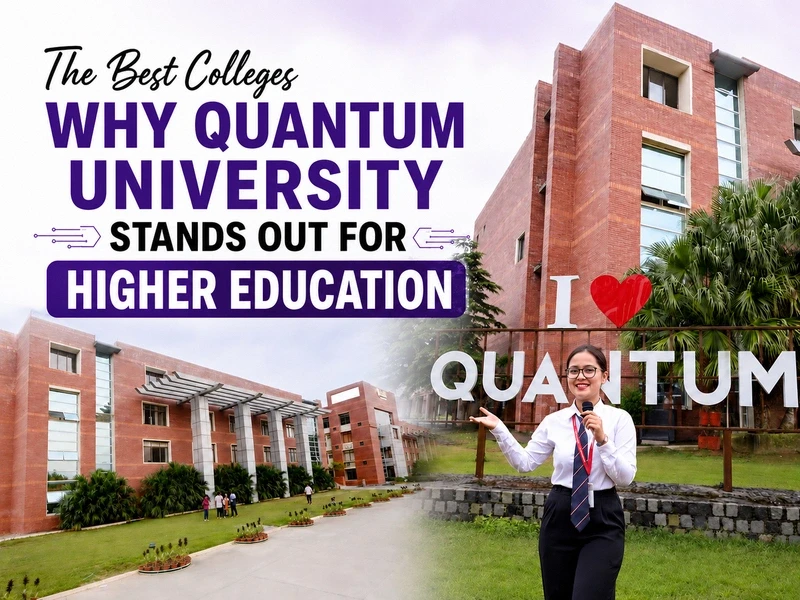
In today's time, you will see a college in almost every lane of the country, making a student's confusion completely understandable when every single institution makes higher claims than the last. This saturation of higher education options means you cannot simply rely on heavy campus signage or bold print advertisements to make a final career decision. If you want a genuine return on your educational investment, finding the Best Colleges in Dehradun for Higher Education requires you to drop the marketing noise entirely and look at raw operational data. Quantum University operates in this exact competitive landscape, situated along the Roorkee-Dehradun corridor where hundreds of institutes fight for student admissions every season. The campus attempts to break away from the traditional, rigid branch setups by running an interdisciplinary major-minor curriculum that lets you cross academic boundaries. But before you fill out any application forms or submit registration fees, you need to analyze the actual academic tracks, financial costs, median placement numbers, and daily classroom realities to see if this model fits your career trajectory.
Higher Education Pathways: Course Structures and Specializations
When exploring higher education opportunities in Dehradun, understanding the structural layout of your chosen degree matters far more than baseline commercial branding. The university divides its programs across clear technical, professional management, and postgraduate specializations.
1. Engineering and Technology Programs (B.Tech)
The majority of students entering this industry continue aiming for the Bachelors of Technology degree. The program divides your choices clearly – go with the more traditional, hardware-oriented engineering courses or jump right into specialized software courses.
- Engineering Core Tracks: They comprise traditional engineering branches such as Mechanical Engineering (ME), Civil Engineering, and Electrical Engineering (EE), which focus on construction and machinery production.
- Computer Science Engineering (CSE): It deals with computer-based tracks that include software development, system designs, and databases.
- B.Tech (Hons) Specialized Tracks: These courses do not use broad generalizations but rather concentrate on specific technological areas. The entire syllabus starts off right with high-level computing with specific data structures for the fields of Artificial Intelligence and Machine Learning, Cyber Security, Data Science, and Cloud Computing.
- Integrated B.Tech + MBA: This five-year track combines an engineering degree and a business degree into a single timeline. It is designed for students who want to move straight into corporate management or run tech projects without wasting a year studying for the CAT exam or applying to separate business schools later.
2. Computer Applications (BCA & MCA)
For students targeting software development without committing to broad mechanical or physics prerequisites, the computer applications track provides a streamlined programming alternative.
- Standard BCA: A three-year track focusing purely on core programming frameworks, database administration, and web engineering basics.
- BCA (AI-ML): A targeted variant focusing on computational intelligence, algorithm training, and automated data processing structures from day one.
- BCA / BCA (Hons) Specializations: A flexible track allowing students to deep-dive into Mobile Application development, Internet of Things (IOT), or advanced Web Technology.
- Master of Computer Applications (MCA): A two-year postgraduate path designed to transition baseline application skills into complex systems architecture and enterprise enterprise software management.
- MCA (AIML): A specialized postgraduate track focusing on advanced neural networks and deep learning models.
3. Management and Business Administration (BBA & MBA)
The business wing targets operational execution, corporate financial modeling, and consumer market metrics.
- Bachelor of Business Administration (BBA): An undergraduate program focused on foundational corporate structures, retail logistics, and basic organizational design.
- Master of Business Administration (MBA): Exclusive two-year management preparation course, featuring advanced business modules, live industry case studies, and organizational psychology.
4. Diplomas and Postgraduate Engineering (M.Tech)
Polytechnic Diplomas
You spend three years learning the absolute basics of mechanics, civil works, and electrical systems. The track works perfectly for high school pass-outs who want to start working in technical field roles immediately. If you already hold relevant certifications, you can use the quick two-year lateral entry option instead.
Master of Technology (M.Tech)
This is a two-year higher degree centered on deep technical design and independent research. You get to opt for highly specialized training streams like AI and Data Science. The qualification aims at engineering graduates targeting senior development jobs or research positions
What it Costs to Study at Quantum University
Your total college expenses depend on whether you choose a standard core degree or an industry-linked honors program. Your home state matters a lot here too. Specifically, local Uttarakhand residents get a cheaper tuition rate than students coming from outside the state. The comprehensive tuition matrix details the annual and total investments across specializations:
Undergraduate Engineering Tracks
- B.Tech (Computer Science & Engineering): Local Uttarakhand residents pay an annual total of ₹1,54,500. Out-of-state students face an annual charge of ₹1,59,500.
- B.Tech (ME / Civil / EE): Local state residents pay ₹1,15,500 annually, while outside applicants are charged ₹1,20,500 per year.
- B.Tech (Hons) CSE Specializations (AI-ML / Cyber Security / Data Science): Local domicile candidates pay ₹1,64,500 annually. Out-of-state registrants pay ₹1,69,500 per year.
- B.Tech + MBA Integrated (5-Year Track): Costs ₹1,56,500 annually for state residents and ₹1,61,500 for outside applicants.
Computer Applications & Business Streams
- Standard BCA: Local Uttarakhand residents pay exactly ₹99,000 for their first year of baseline tuition. Out-of-state applicants face an annual bill of ₹1,02,000.
- BCA (AI-ML): Local residents pay a reduced annual rate of ₹1,19,000, while out-of-state students submit a yearly tuition total of ₹1,22,000.
- BCA / BCA (Hons) Mobile Application & Web Technology / IOT: Demands a first-year total of ₹1,13,500 for Uttarakhand residents, shifting to ₹1,16,500 for out-of-state students.
- BBA Track: Demands ₹1,06,500 for the first year of study for standard batches.
- MBA Track: Sees a sharp jump, costing roughly ₹3,35,000 for the entire two-year duration due to specialized training modules.
Postgraduate Engineering & Diplomas
- M.Tech (Core Streams): Local state residents pay ₹88,500 annually, while outside applicants pay ₹93,500.
- M.Tech (AI & Data Science Specialization): Costs ₹1,10,500 per year for locals and ₹1,15,500 for out-of-state candidates.
- MCA Standard: Domicile students pay ₹99,000 annually; outsiders pay ₹1,02,000.
- MCA (AIML): Locals pay ₹1,13,500 per year, while out-of-state students face a ₹1,16,500 annual charge.
- 3-Year Diploma paths: Local residents pay ₹61,000 annually, while outside candidates submit ₹65,000 per year.
Hostel and Living Expenses
Living on campus adds a fixed amount to your annual bill. The university features separate residential quarters for boys and girls inside the main campus premises.
| Accommodation Type | Annual Fee Rate | Key Conditions and Rules |
| Standard Non-AC Room | ₹96,000 | Includes basic laundry up to 40 clothes per month. |
| Air-Conditioned Room | ₹1,18,000 | AC charges are non-refundable if you vacate early. |
| Security Deposit | ₹5,000 | One-time payment, refundable after graduation. |
You must understand one strict rule before booking your campus room. If you decide to move out halfway through the year, or if management kicks you out for breaking campus rules, you lose every single rupee you paid for that academic term. The university refuses to give partial refunds for short stays.
Placements: Analyzing the Latest Statistics
Putting hard cash into a college degree means you expect a direct line to a paycheck. If you are hunting for the best college in Dehradun for placements, you have to look past the massive billboard percentages and look directly at the median salary figures. That is the only way to see what an average graduate actually takes home. The school frequently gets ranked among the Best Private Colleges in Dehradun with Placements simply because it sits near a busy industrial zone, but you still need to strip away the campus marketing fluff to see the real entry-level numbers.
Highest vs. Median Packages
The absolute highest package recorded at the university stands at ₹33.5 LPA. Marquee recruiters like Amazon occasionally pick top-tier talent from the computer science waves for these premium positions. This number represents the absolute ceiling, not the norm for the average student. The verified average package across all technical streams is ₹5.8 LPA. The recent National Institutional Ranking Framework (NIRF) data reveals a median salary of ₹4.5 LPA for undergraduate batches. A median package tells you that exactly half of the graduating class earned less than ₹4.5 LPA, while the other half earned more. This is the realistic baseline you should use to calculate your return on investment.
Core Sectors and Top Recruiters
Most campus hiring comes from tech companies. You see the usual suspects like Wipro, TCS, Capgemini, HCL, and Cognizant filling up the recruitment calendar during final semesters. They mainly want system engineers or graduate trainees. But the geography creates a different opportunity. The campus sits right next to the industrial hubs in Roorkee and Haridwar. Hence, firms making warehouse gear and supply chain tech target the mechanical and industrial students here. They need people for plant operations, quality control, and logistics management. You will work with heavy material handling tools. This gives you raw, hands-on manufacturing experience. You rarely find that level of practical exposure in city-based software hubs.
Classroom Realities, Daily Schedules, and Labs
Daily life inside the campus mixes traditional lecture hours with a highly adaptable major-minor system. The institute operates as an industry-oriented university in Uttarakhand, making your daily class timetable look completely irregular compared to standard, single-track colleges.
The Interdisciplinary Structure
The core philosophy here revolves around breaking rigid branch walls. You can pursue a B.Tech in Cyber Security while taking elective modules in economics or digital filmmaking. This works well if you want a diverse skill set, but it requires high personal discipline. You are responsible for managing conflicting class timings and ensuring your minor credits pile up correctly before the final semester. The academic pressure is manageable, provided you maintain the mandatory 75% attendance threshold. The university enforces this rule strictly. Falling below the line means you will be barred from sitting for the end-semester examinations, regardless of your internal assessment grades.
Campus Infrastructure, Specialized Workspaces, and Libraries
This campus fits right into the bracket of Colleges in Dehradun with modern infrastructure, packing its labs with the computing setups needed for data science, web development, and cloud tracks. Over in the civil and mechanical workshops, you get standard testing gear, though expect to wait your turn for advanced research tools during peak project weeks. When finals hit, the central library stays open late and gives you digital login access to major global research journals.
Evaluating the Investment: Is it Right for You?
Quantum University is ideal for small-town students looking to earn a professional degree without suffering through harsh living expenses in cities like Delhi and Mumbai. The multi-disciplinary curriculum allows you to explore multiple subjects and gives you flexibility to integrate technology subjects with skills in business and design on your own choice. The college provides an edge for enterprising students in the local job market, owing to its proximity to the major Industrial hubs. The classrooms being right next to the industrial area ensures that you easily turn local internships into jobs even while studying. With the upgraded laboratories, students are provided enough space to develop a compelling portfolio, all at much reasonable fees. While the campus placement office brings companies to your doorstep, the biggest advantage is that the school gives you the practical tools and freedom to land great jobs anywhere in the region.
Step-by-Step Admission Process
- Online Registration (Takes 15 minutes): Visit the official portal and fill out the basic registration form. You must pay a non-refundable registration fee of ₹1,200 to generate your unique applicant ID.
- Document Verification (Within 7 working days): Upload your 10th and 12th-grade mark sheets along with your JEE Main or Q-Care scorecard. The admissions committee reviews your academic eligibility against the 50% minimum threshold.
- Seat Allocation and Offer Letter (Conditional approval): If your marks meet the branch cut-off, the university issues a formal admission offer letter detailing your allocated branch and fee cycle.
- First Semester Fee Deposition (To secure the seat): Deposit your first-semester tuition fee via Demand Draft or NEFT transfer to the university account. Missing the deadline cancels your allocation automatically.
- Physical Reporting (On campus induction): Report to the Roorkee campus with original documents for physical cross-verification. You will submit your hostel choice and collect your academic timetable during this stage.
Conclusion: The Final Verdict
Your job prospects after graduation rest entirely on the actual portfolio you build over these four years. Most local institutions just force you to memorize old textbook definitions that corporate interviewers do not care about. Quantum University breaks away from that style. The school secures its position as the best university for higher studies in Uttarakhand by letting you mix major engineering credits with different minor tracks. The campus acts as an active partner by providing the labs and corporate connections you need to succeed. But a great career still requires your own personal drive to cross the finish line. So you must use the nearby industrial area to land hands-on internships before graduation. The tech tools are open and ready, and the university gives you the exact structural backing to turn your hard work into a premium placement.
Frequently Asked Questions
What are the primary eligibility rules for securing engineering admission at Quantum University?
Applicants must clear their 10+2 board examinations with a minimum score of 50% marks in the core Physics, Chemistry, and Mathematics stream. The admissions office accepts valid national JEE Main merit ranks or your score on the internal Q-Care test during state counseling cycles.
How does the unique i-deserve program optimize campus placement records for students?
The system runs parallel to standard university curriculum schedules to build industry-specific technical assets. Students complete intensive, practical mock modules covering core software code testing, logical aptitude, and corporate interview communication to bypass entry-level company filters.
Can an undergraduate candidate choose a professional management major along with a creative minor stream?
Yes. The interdisciplinary academic system allows you to select a primary major like a BBA or B.Tech and dedicate designated weekly hours to certified minor passion paths including photography, economics, or literature.
What specific campus infrastructure supports advanced artificial intelligence and machine learning research?
The university campus houses the specialized Dr. A.K. Khare Centre for Artificial Intelligence. This physical facility provides high-performance computing clusters and enterprise graphical processing systems to test machine learning algorithms under real-world data production loads.
What is the complete registration payment required to begin the baseline entry cycle?
Candidates must submit a flat, non-refundable application fee of ₹1,200 using online NEFT transfers or physical demand drafts. This transaction acts as the primary step to register your academic profile before formal document verification begins.
Are local Uttarakhand domicile applicants eligible for tuition reductions on the Roorkee campus?
Yes, the institution allocates specific fee concessions across undergraduate paths for verified state residents who present valid domicile certificates. For instance, standard B.Tech computer tracks start around ₹1,15,500 annually for state residents compared to higher baseline charges for outside applicants.
